You can download a face mask pattern here.
Members’ Work March 2026
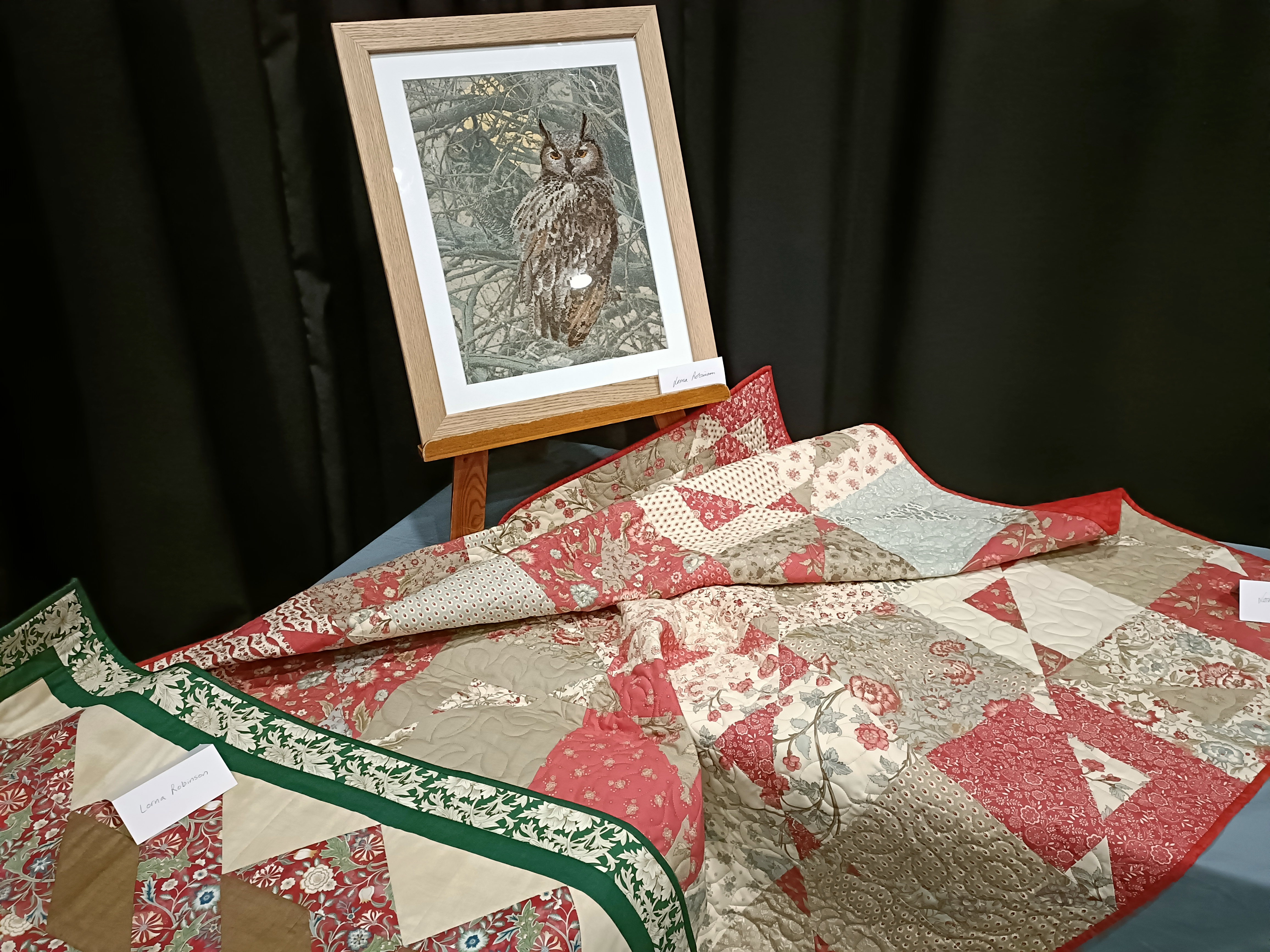
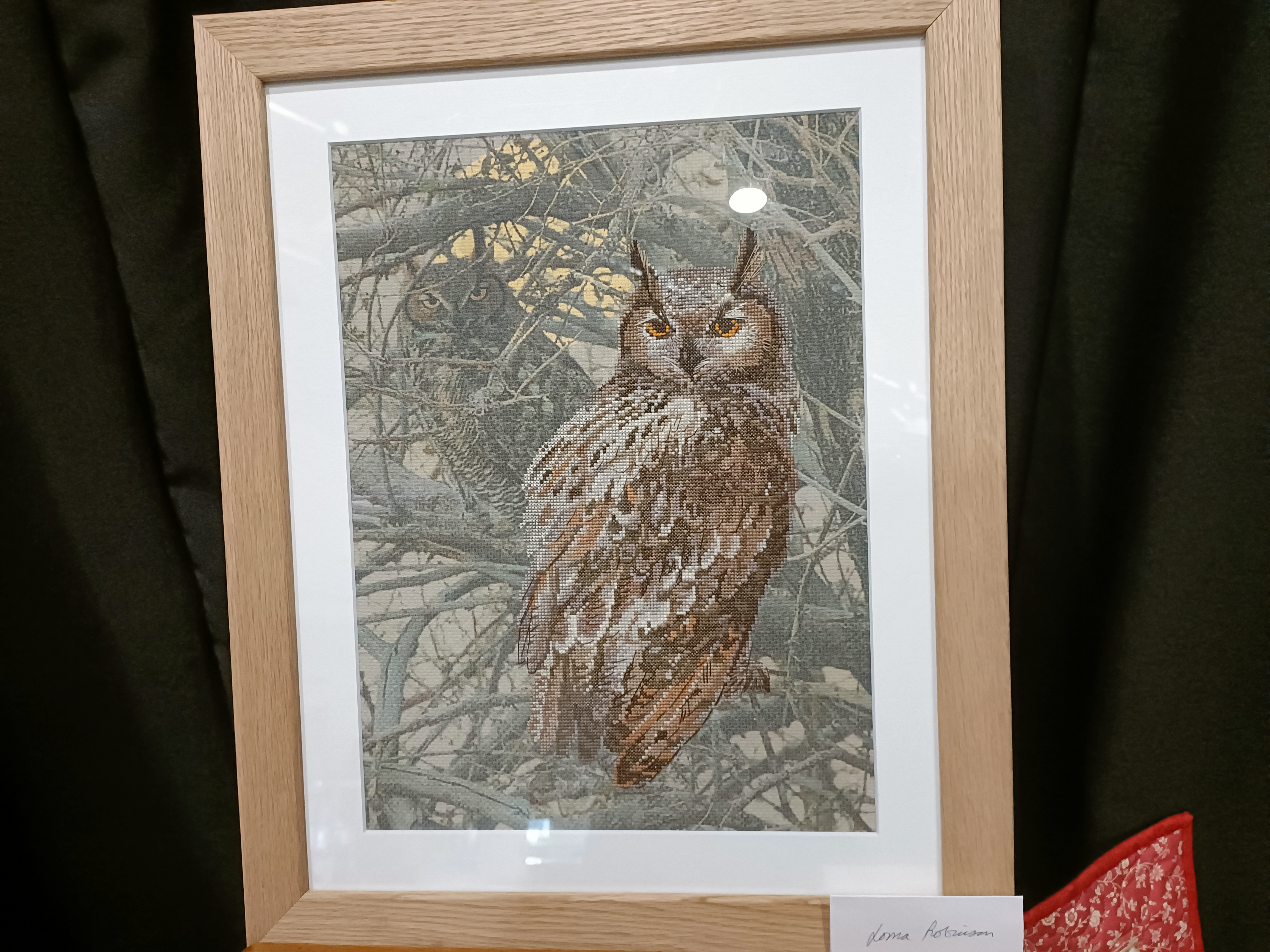
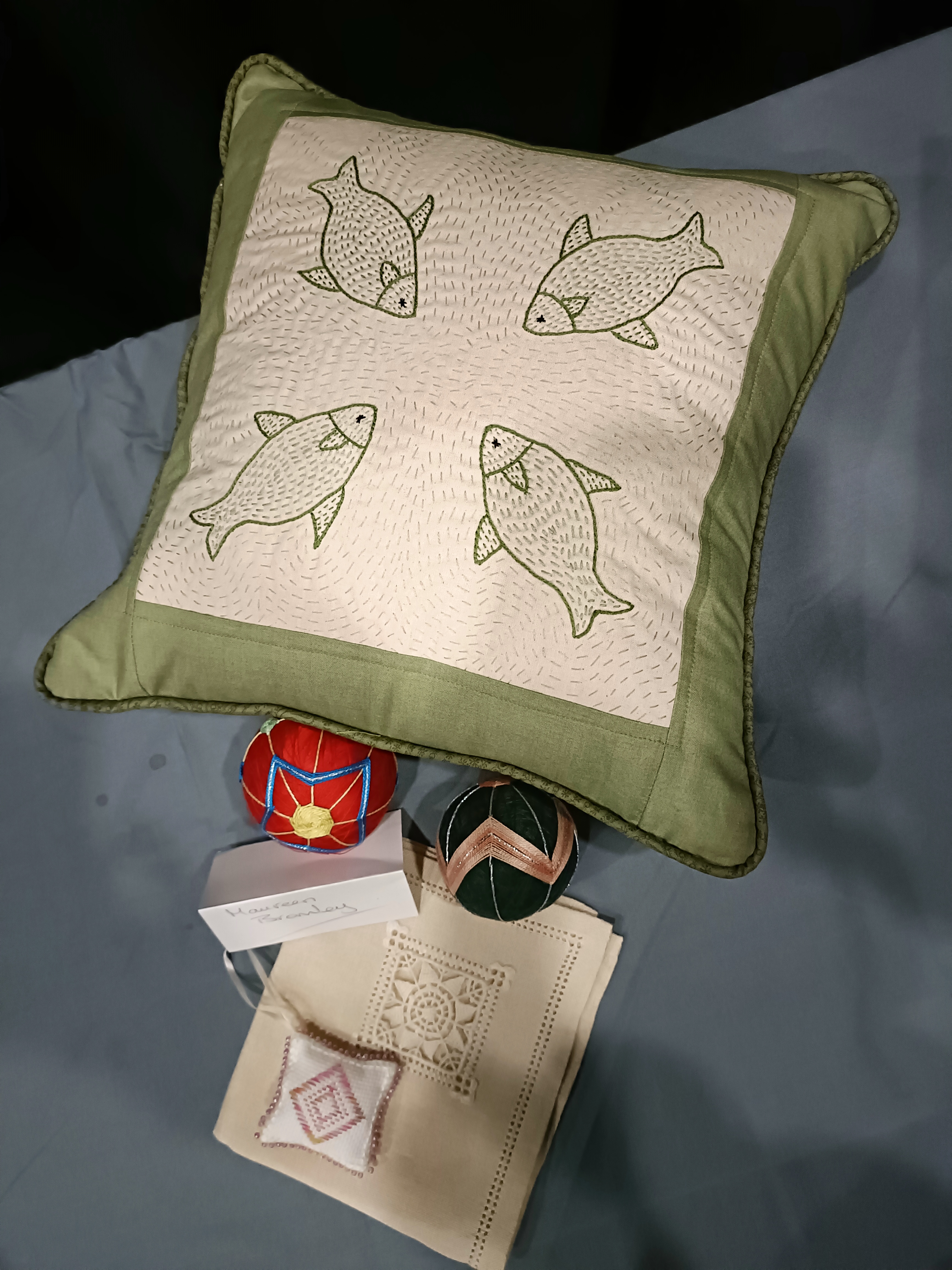
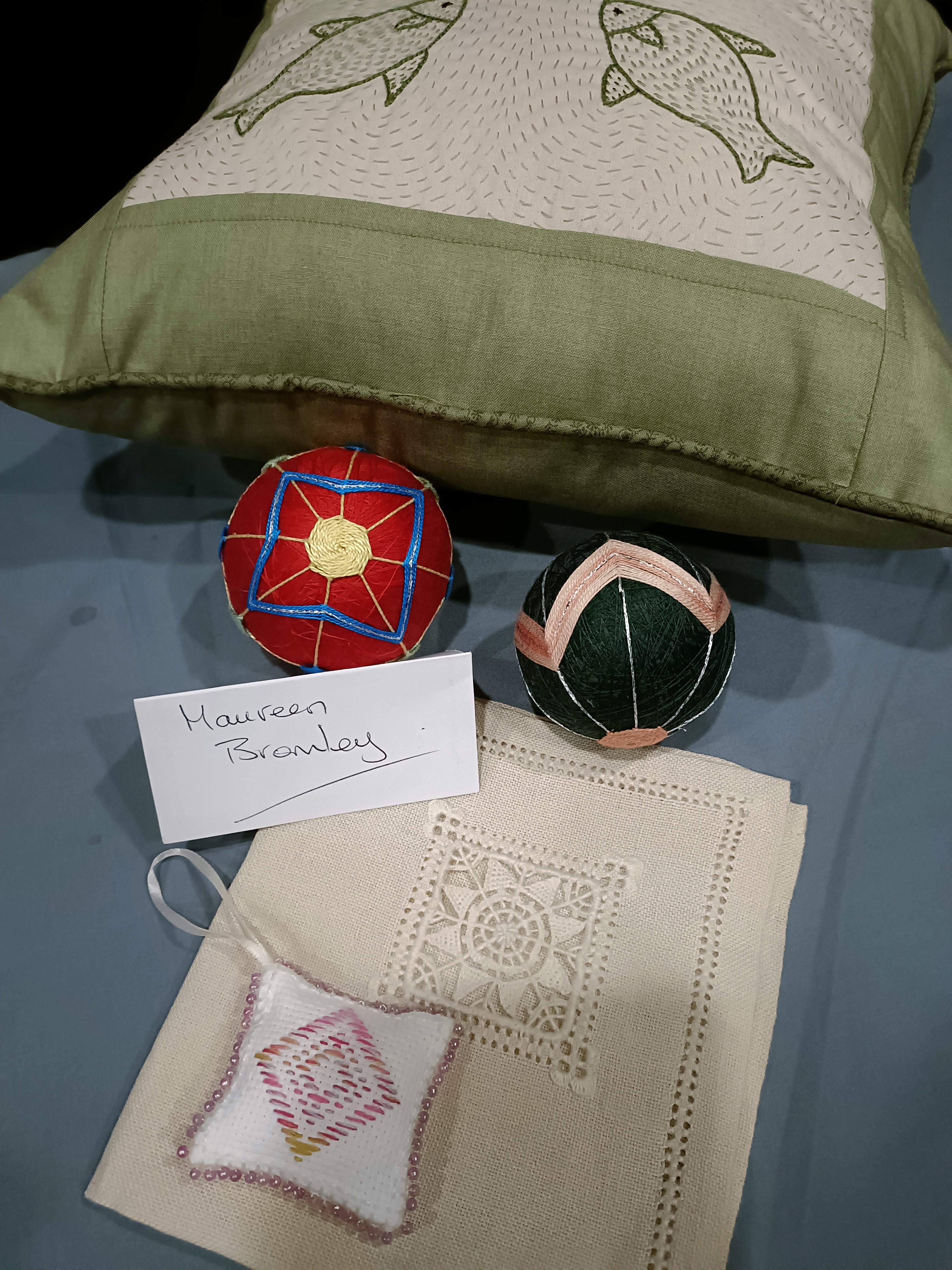
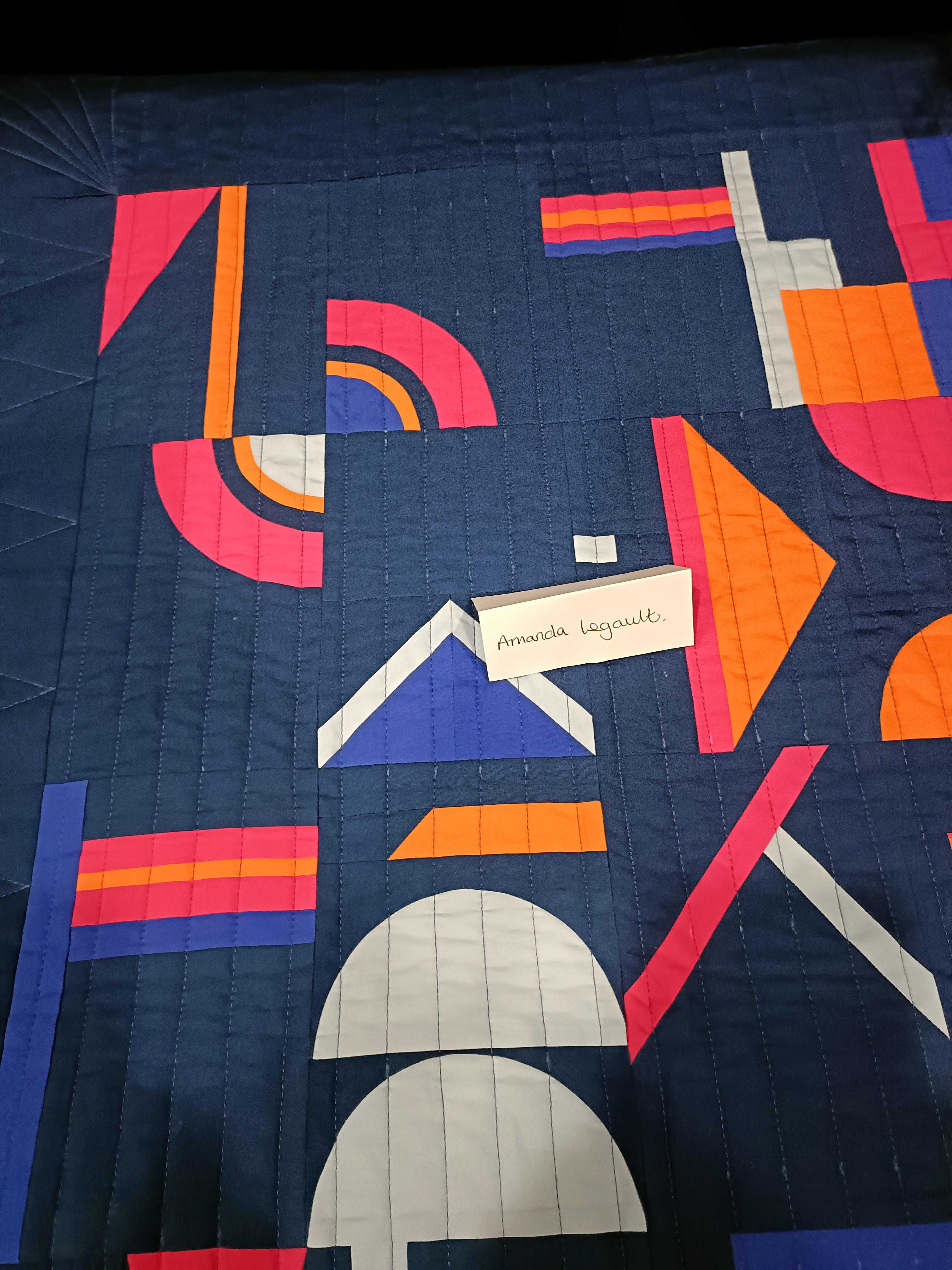
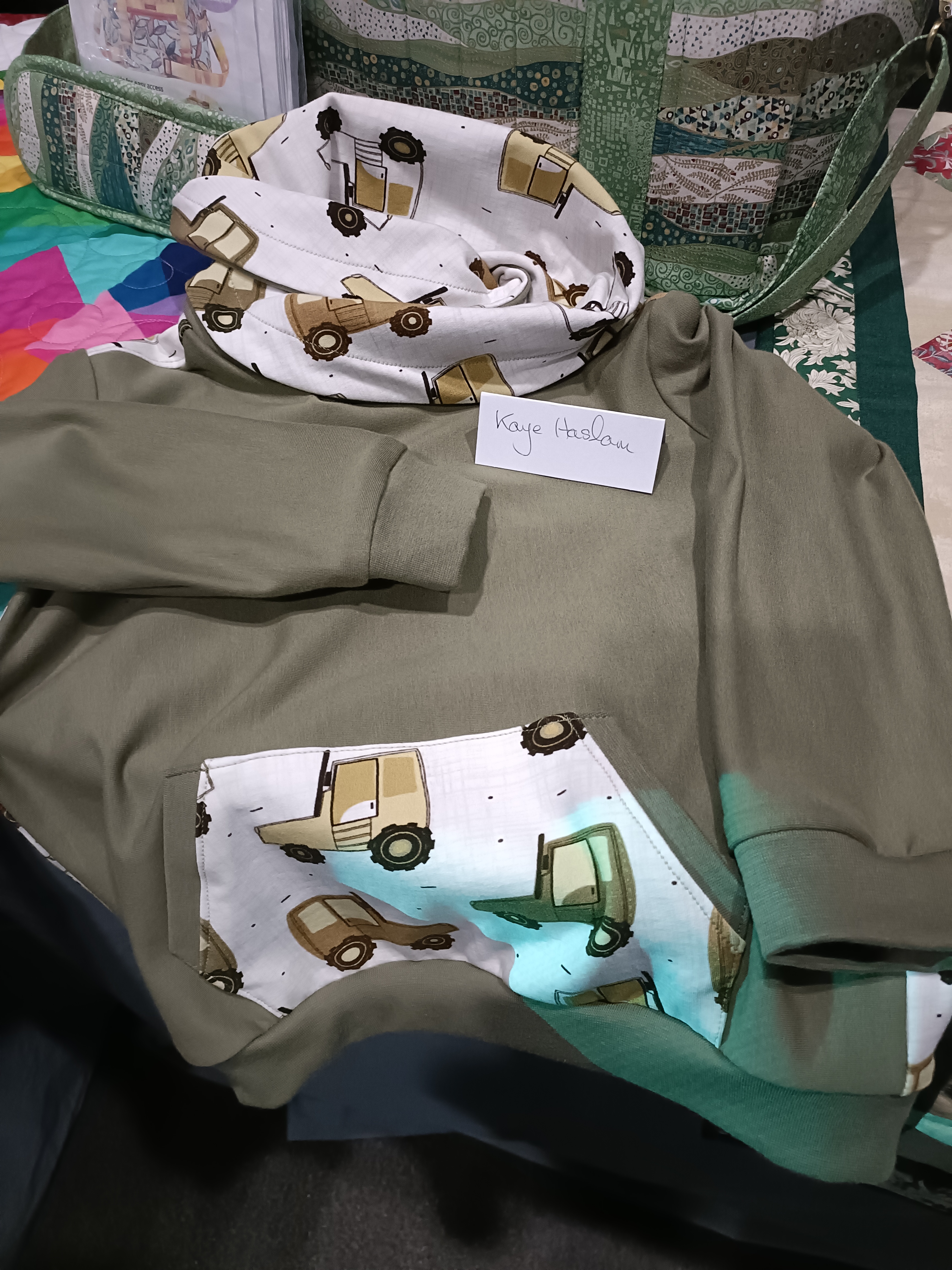
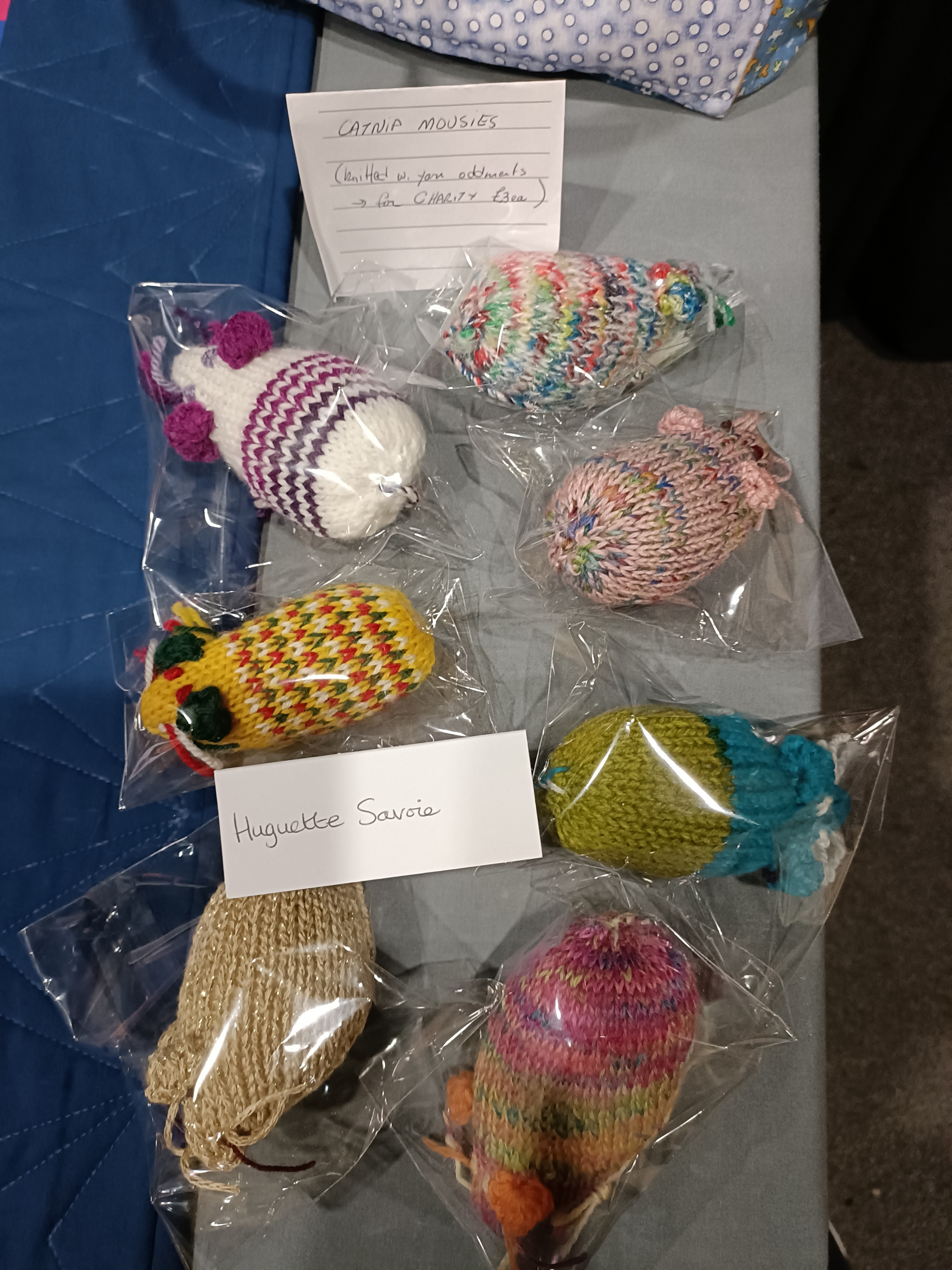
March 2026 – Ruskin Lace
Our speaker for March was Karen Quickfall, who came to speak to us about Ruskin Lace. She took us through the history of this textile, and how John Ruskin’s housekeeper, Marion Twelves, started a cottage industry based on Sicilian and Greek embroidery, developing the form of linen embroidery that Ruskin lends his name to. Karen explained the techniques of making the lace, which is worked within the fabric rather than as an edging, and uses a set of basic designs which are worked into larger projects. This was accompanied by several examples of the lace for the members to take a closer look at.
February 2026 – Fashion Design, Fashioning Landscapes
Zac Girdlestone was welcomed and spoke on ‘Fashion Design. Fashioning Landscapes’. He spoke about how his career and creative thoughts had developed from a degree at Lincoln in fashion, creating commercial garments and bespoke pieces, then investigating how landscapes affect emotions and how this can be depicted in design. He explored using calico strips to draw in 3-D and creating series of tote bags with free motion embroidery detail. He brought examples of his garments and his free motion embroidery designs.
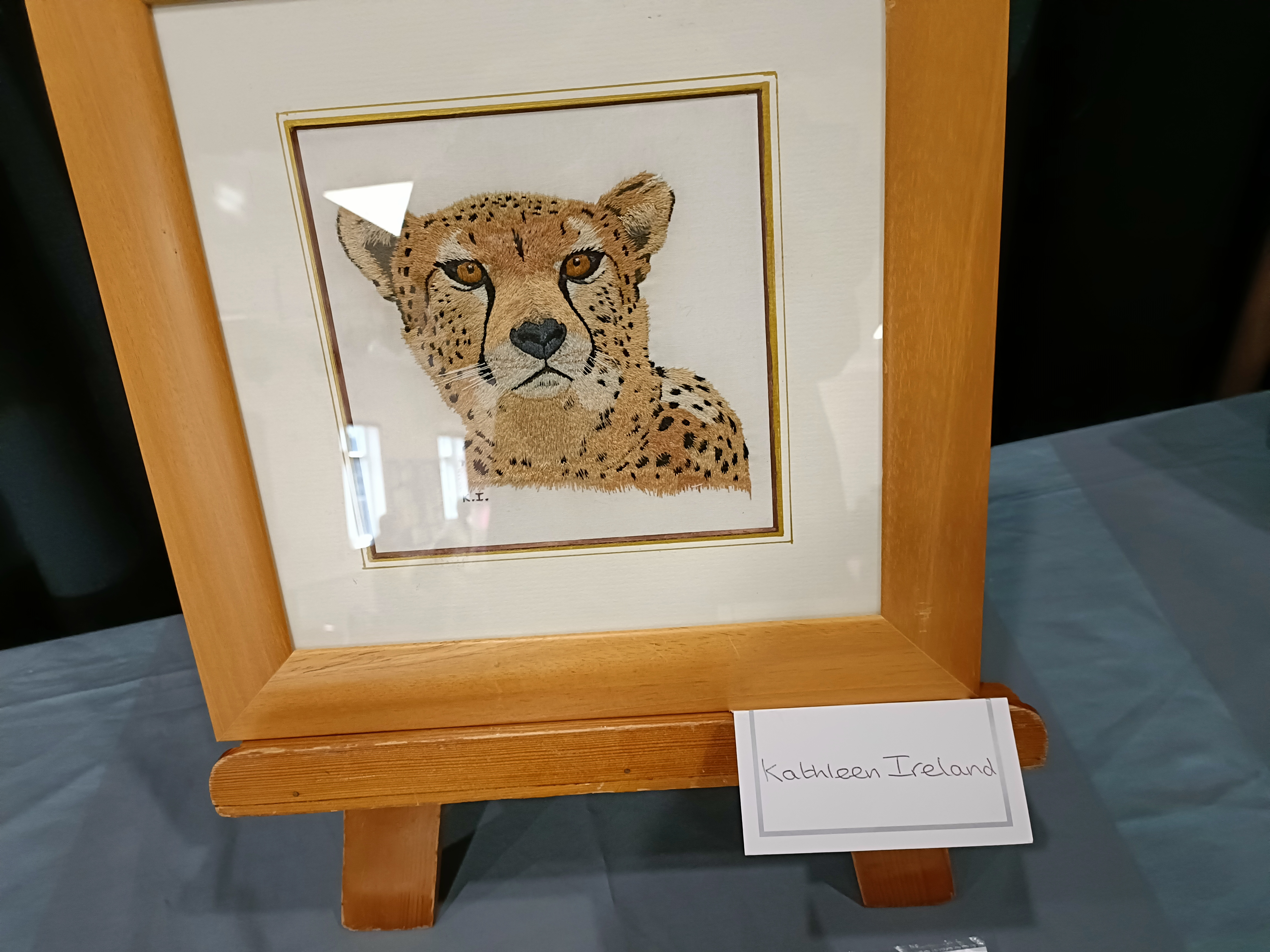
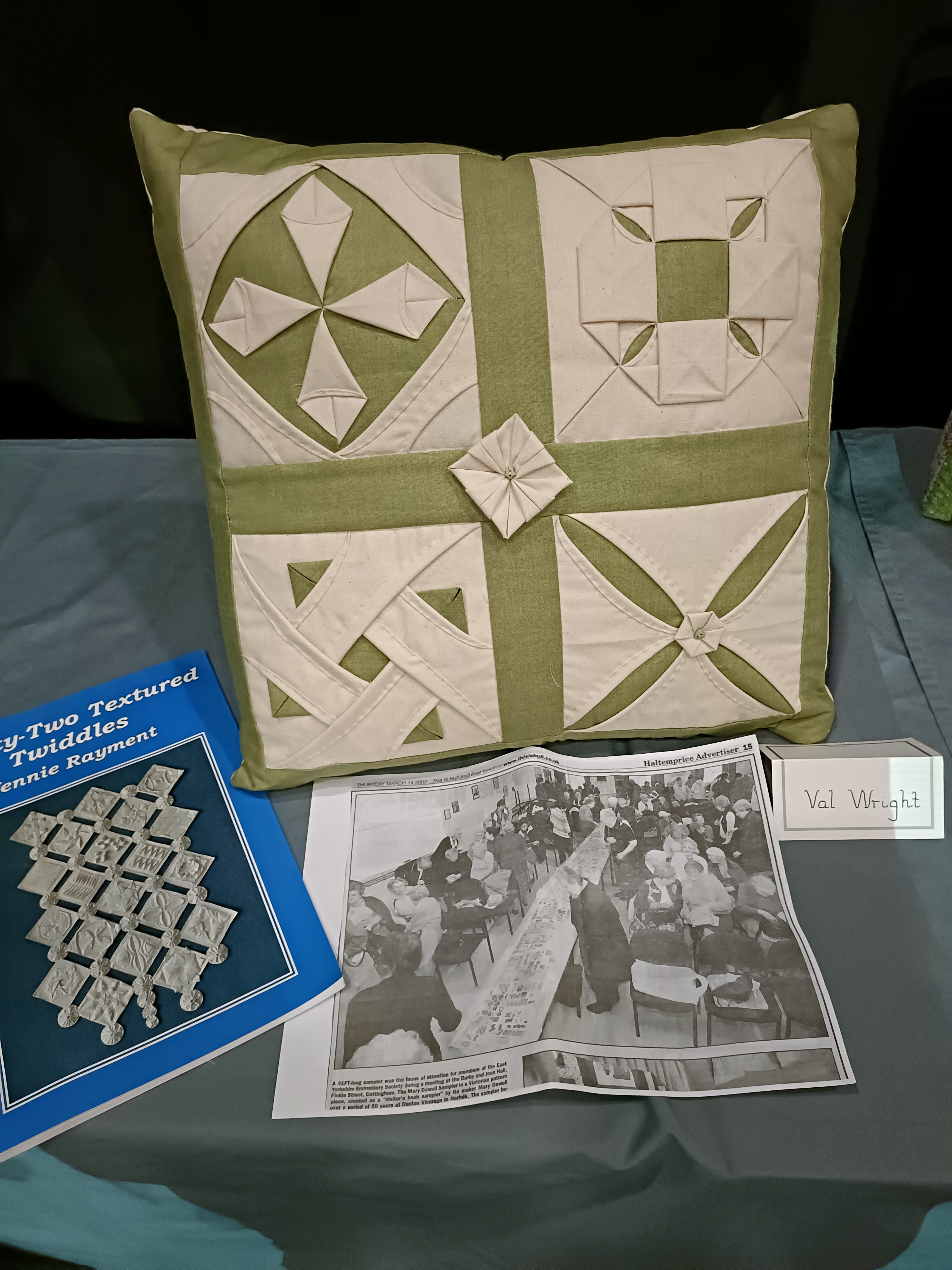
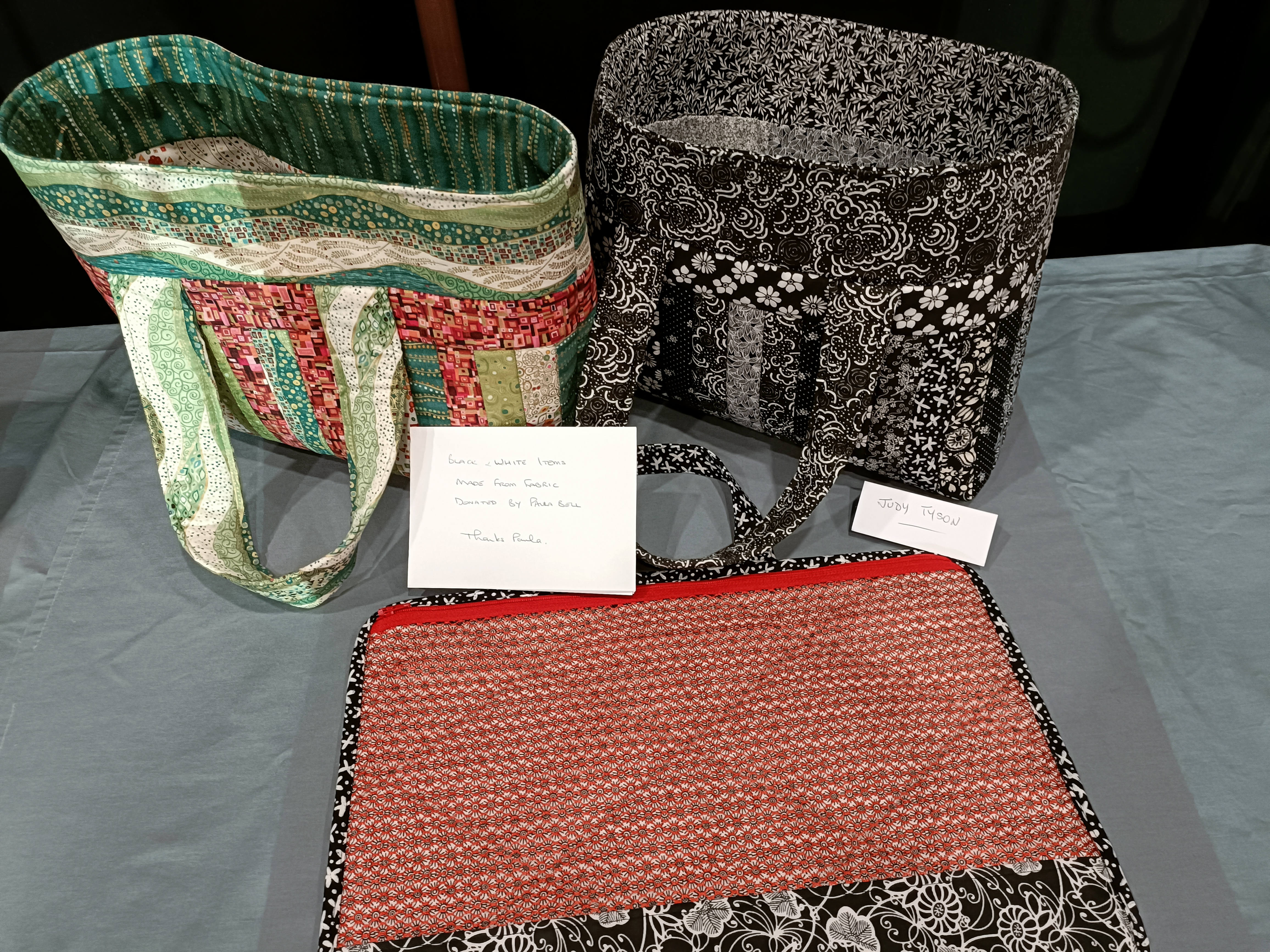
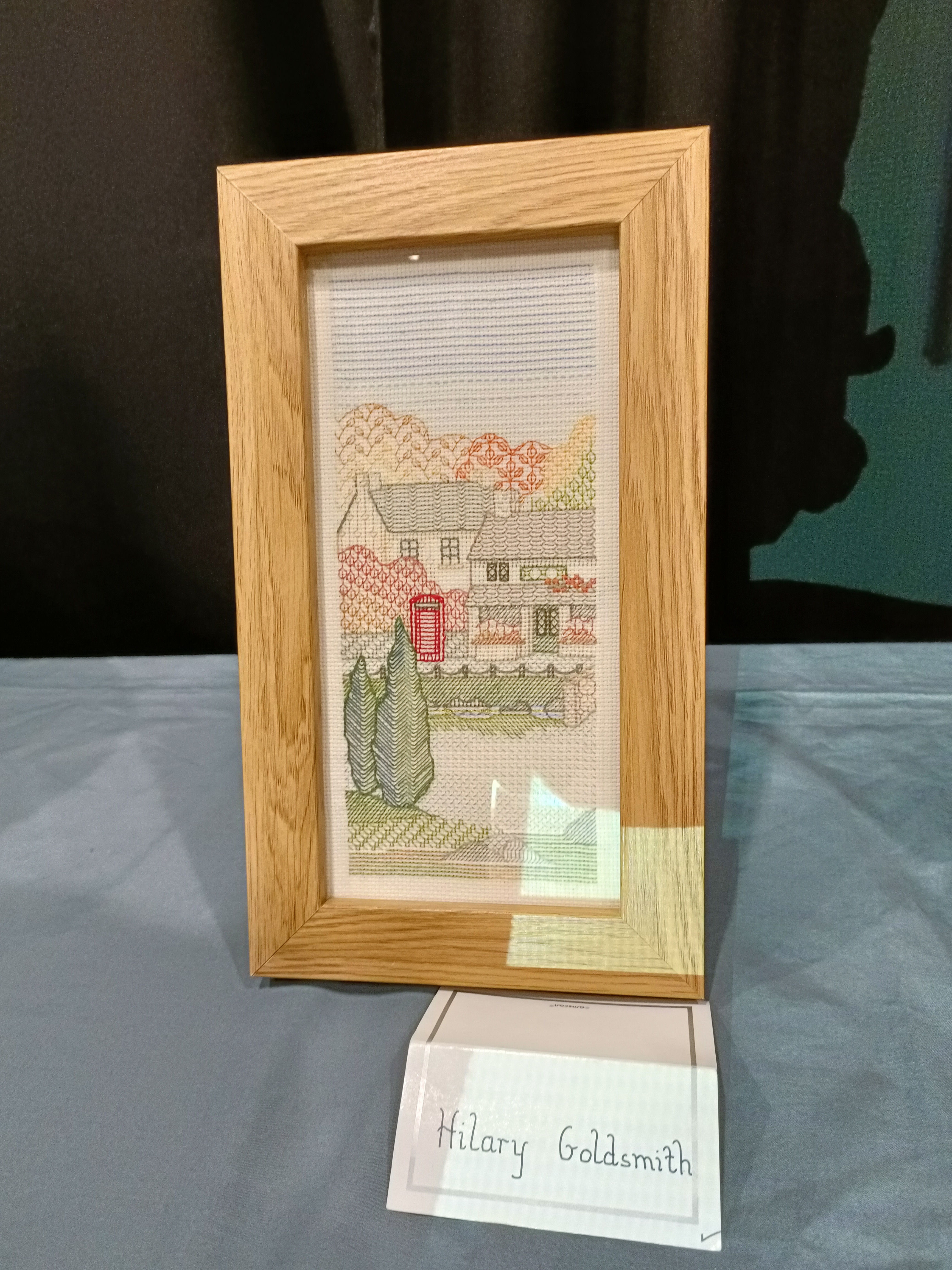
Members’ Work – February 2026
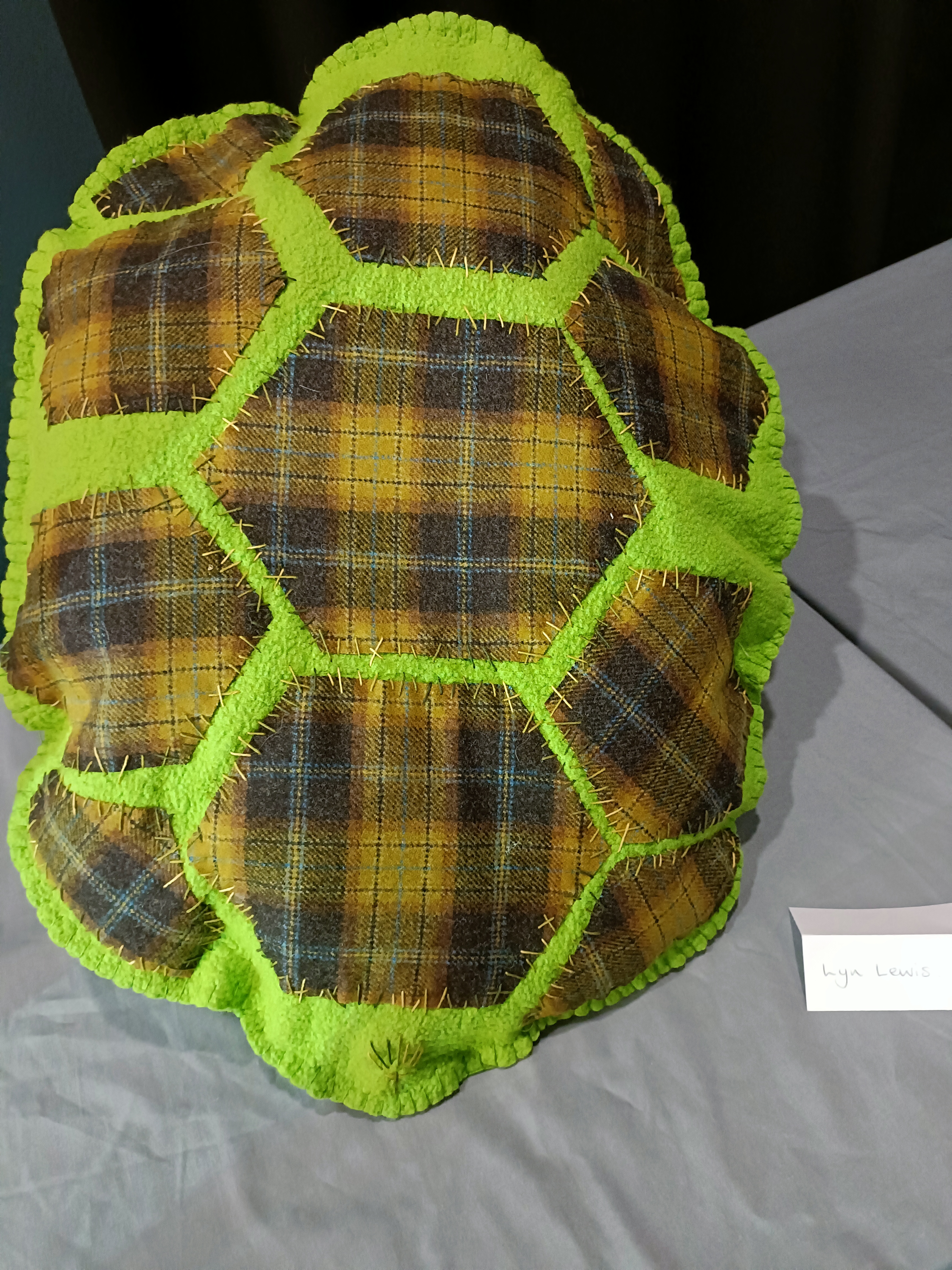
January 2026 – Quilter’s Guild Travelling Trunk – Contemporary Quilts
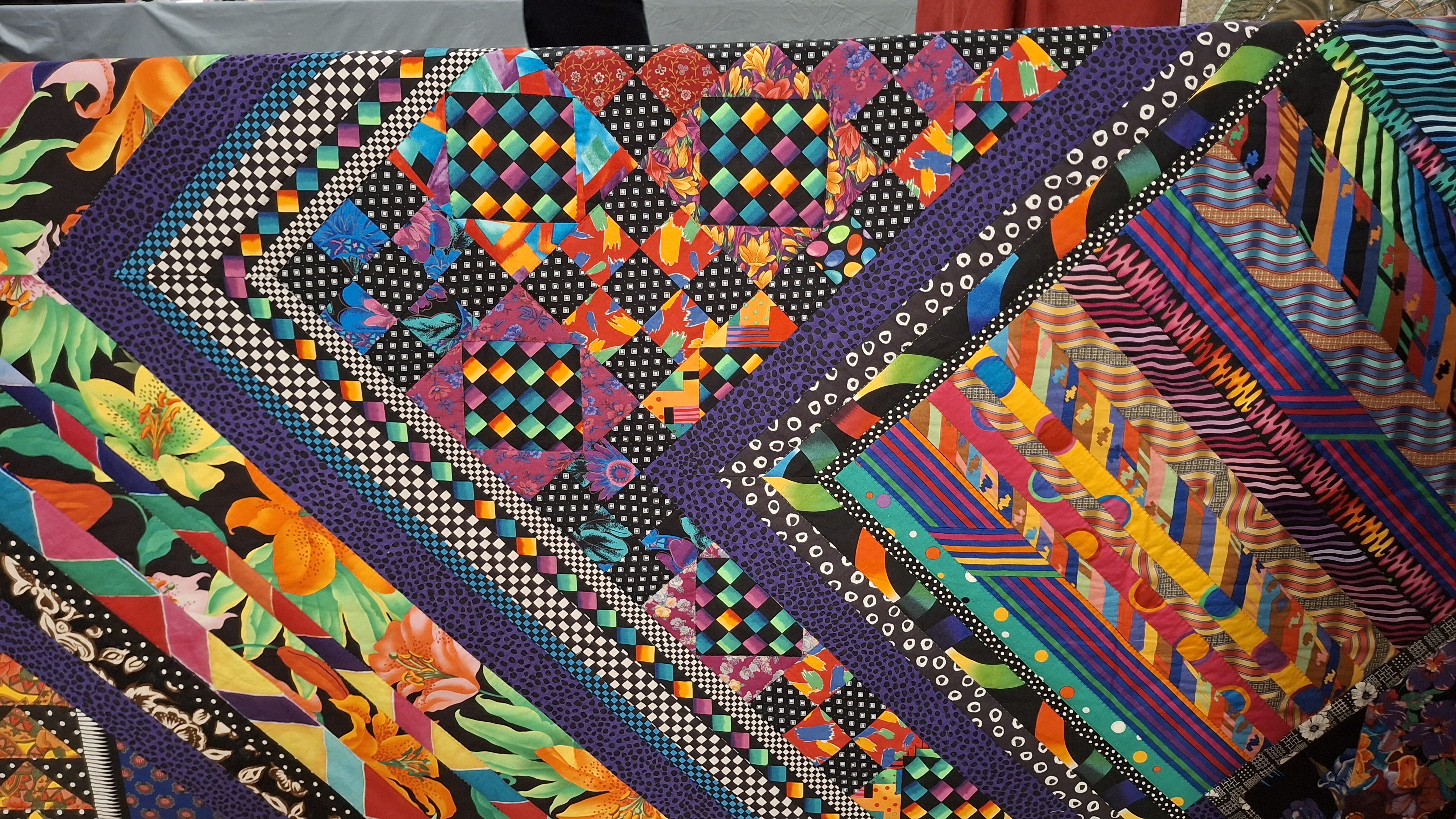
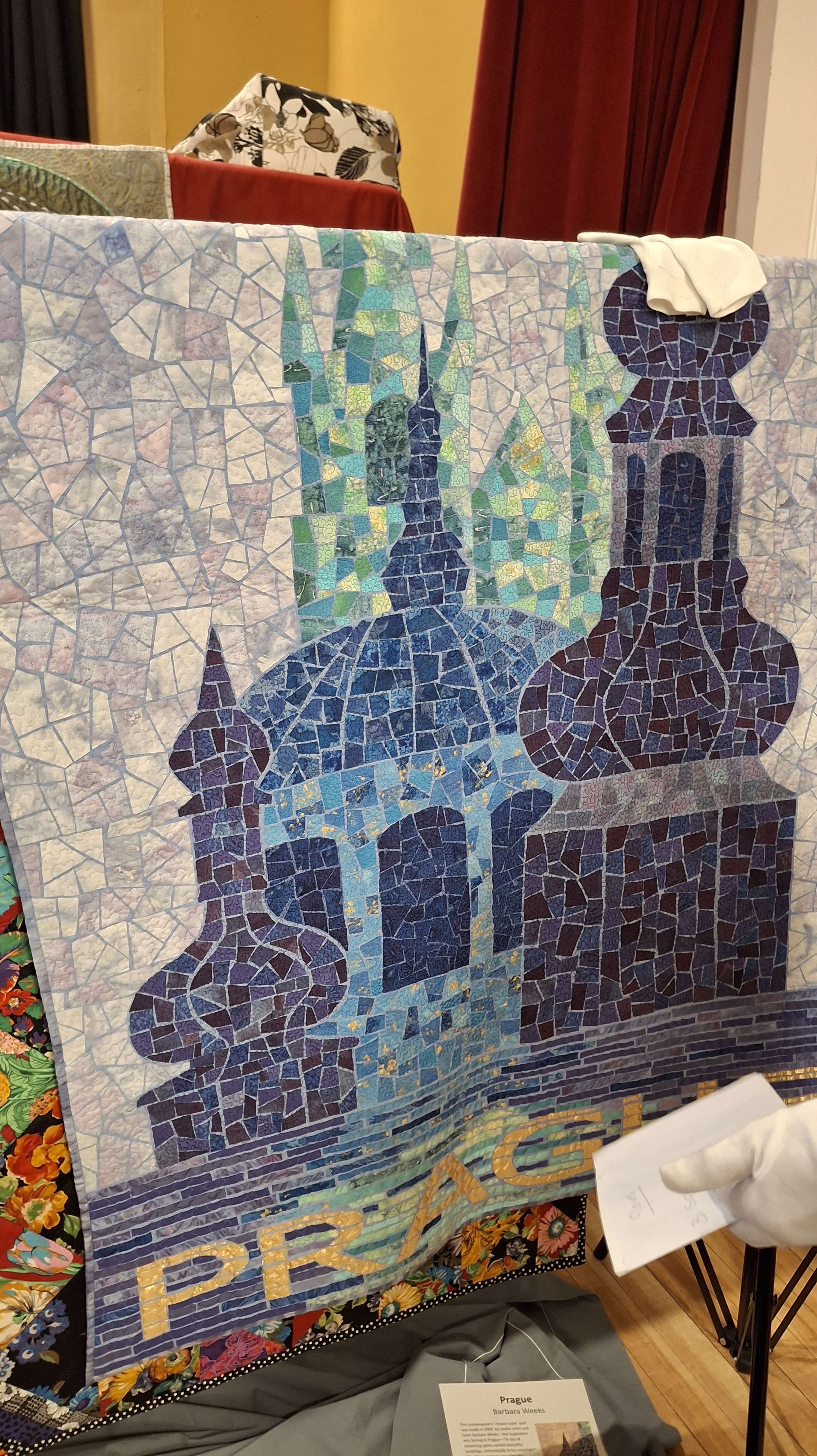
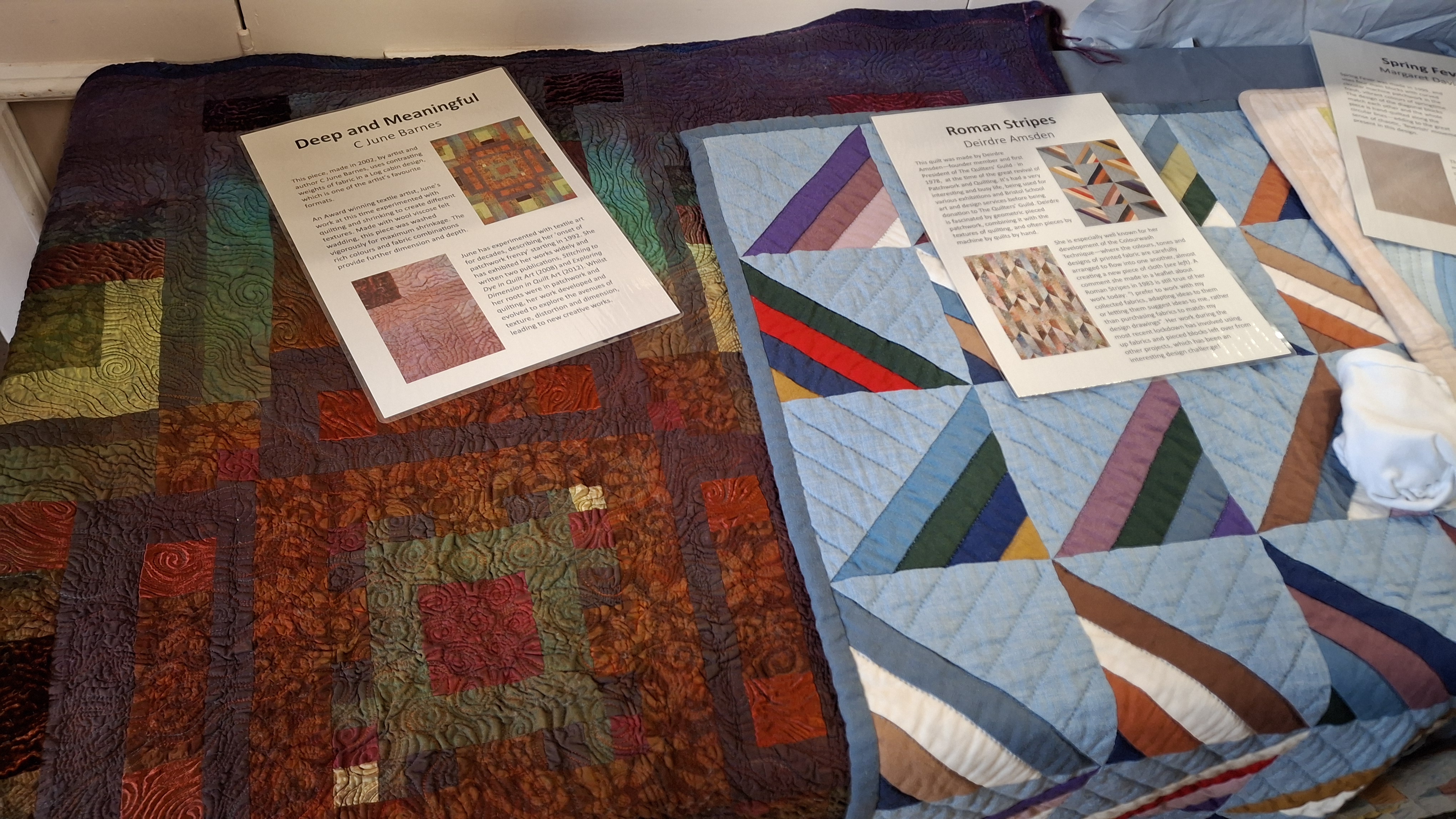
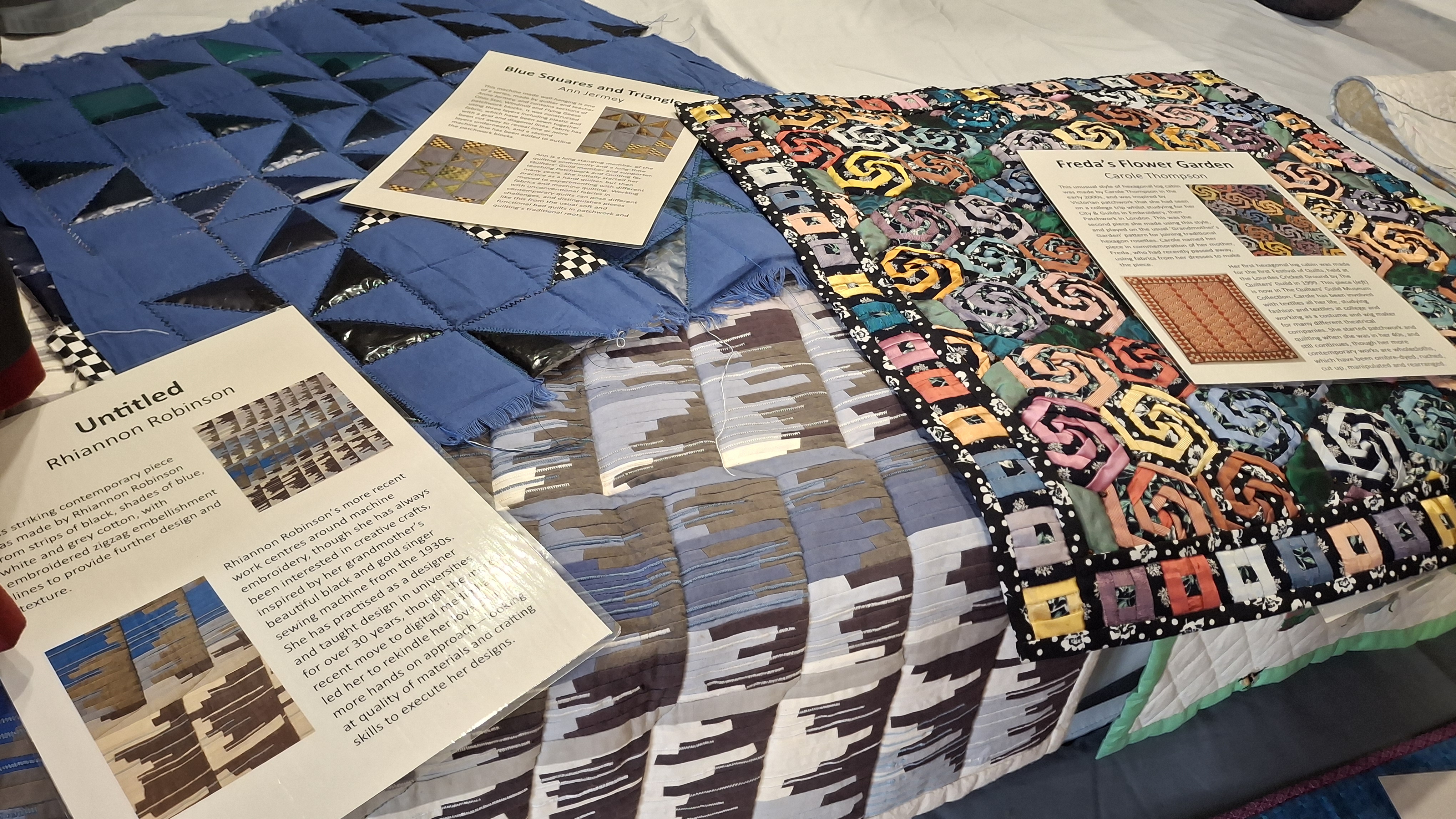
The January meeting saw a collection of quilts presented in a trunk, hired from the Quilter’s Guild, and presented by our members Val Wright, Hilary Goldsmith and Helen Mott. The 11 items in the trunk were all made in the last 40 years, and give examples of the changes, developments, styles and fabrics that have been a key part of patchwork and quilting history.
The pieces were a mix of traditional and modern techniques, showcasing experimentation with designs and fabrics, with inspiration taken from different places to produce pieces that reflect the makers’ lives and the world around them.
Members’ Work – January 2026
December 2025 – Bags
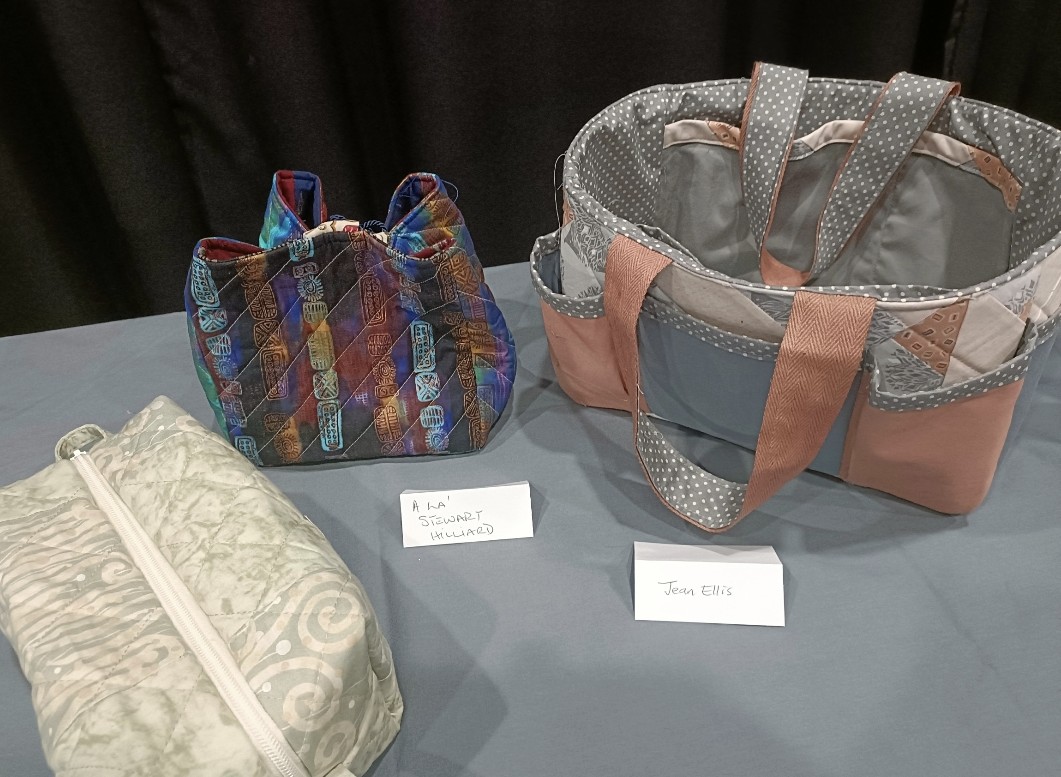
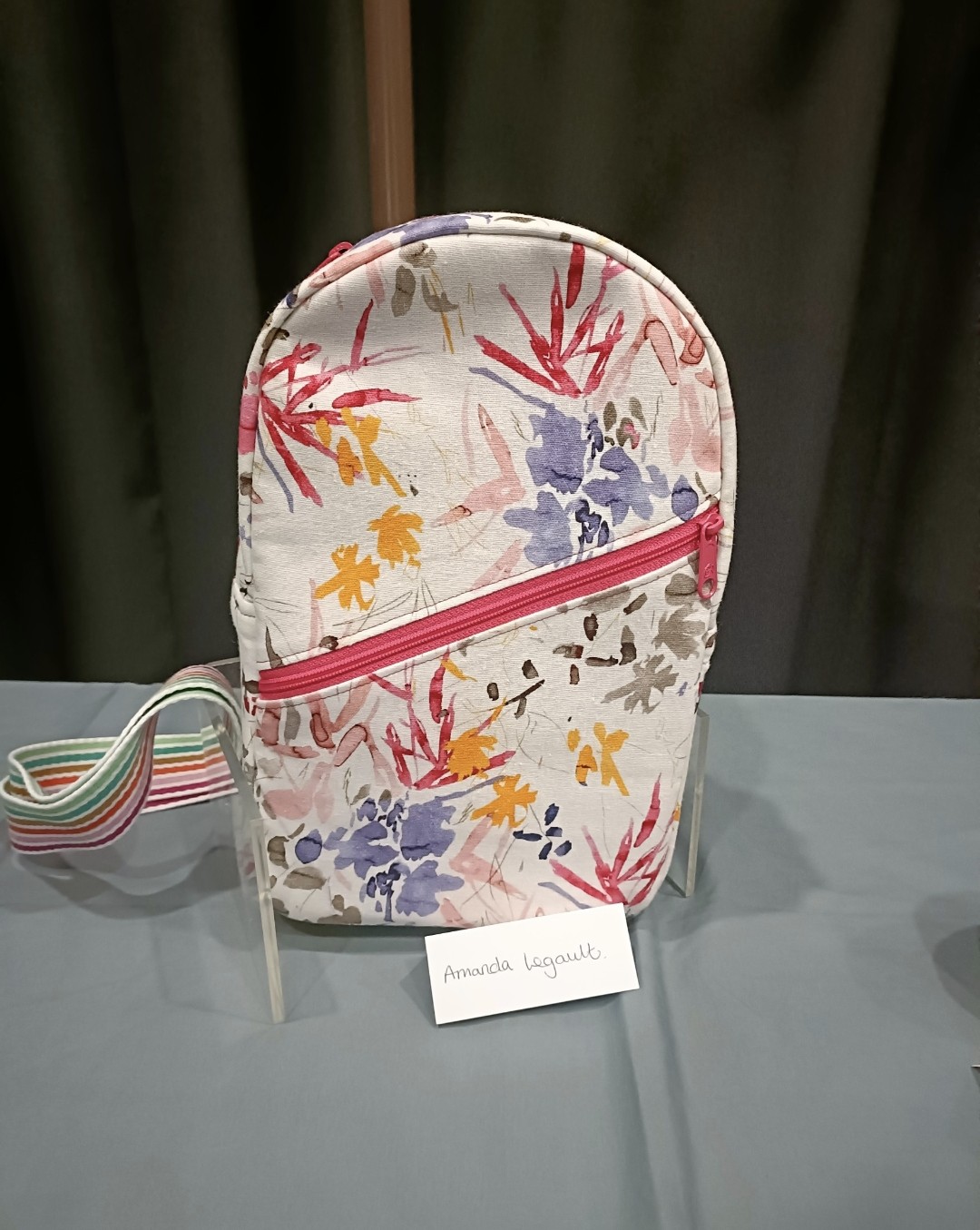
December saw the return of Stuart Hillard, who came to us with the talk “Bags”. This was an amusing talk-and-show presentation, where he explained how he had compiled his books, beginning with the design and making of one bag. He brought a great number of samples, pointed out the details of his work, and gave technical details of how to make bags from that design. His samples included many different types of bags and showed how one design can be made using different techniques including patchwork, improv piecing and boro.
Members’ Work – November 2025



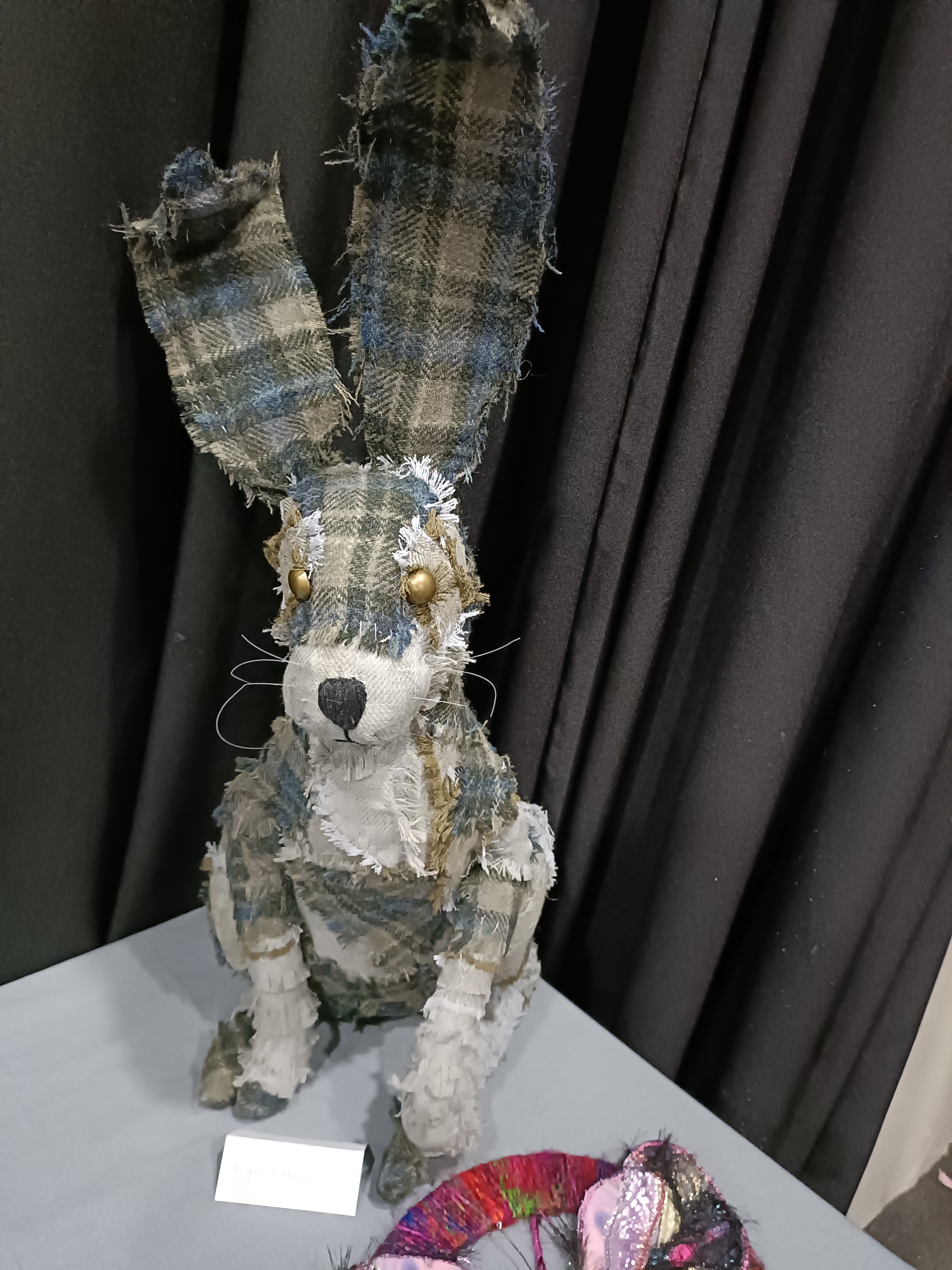
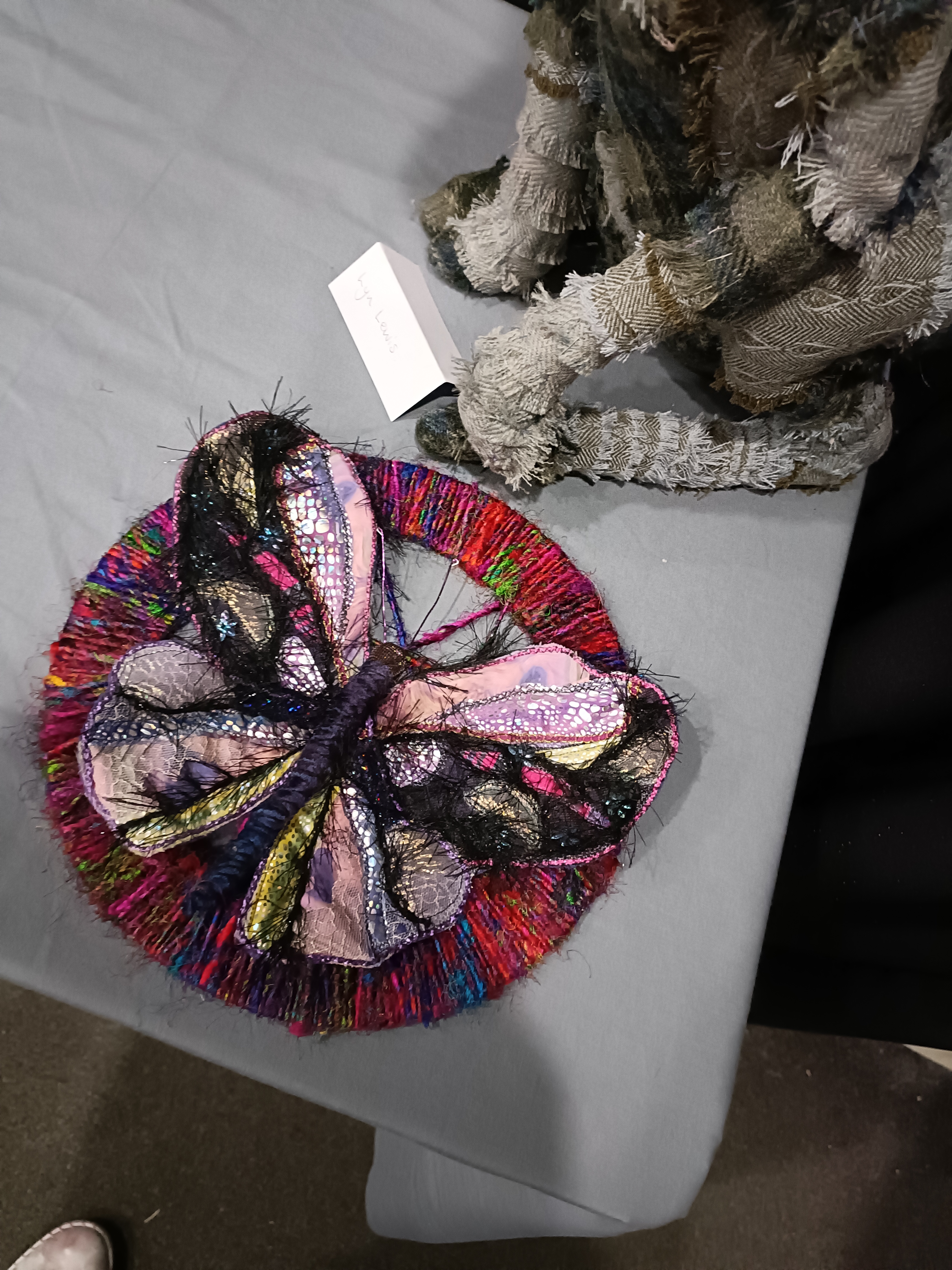
November 2025 – Travels in Textiles
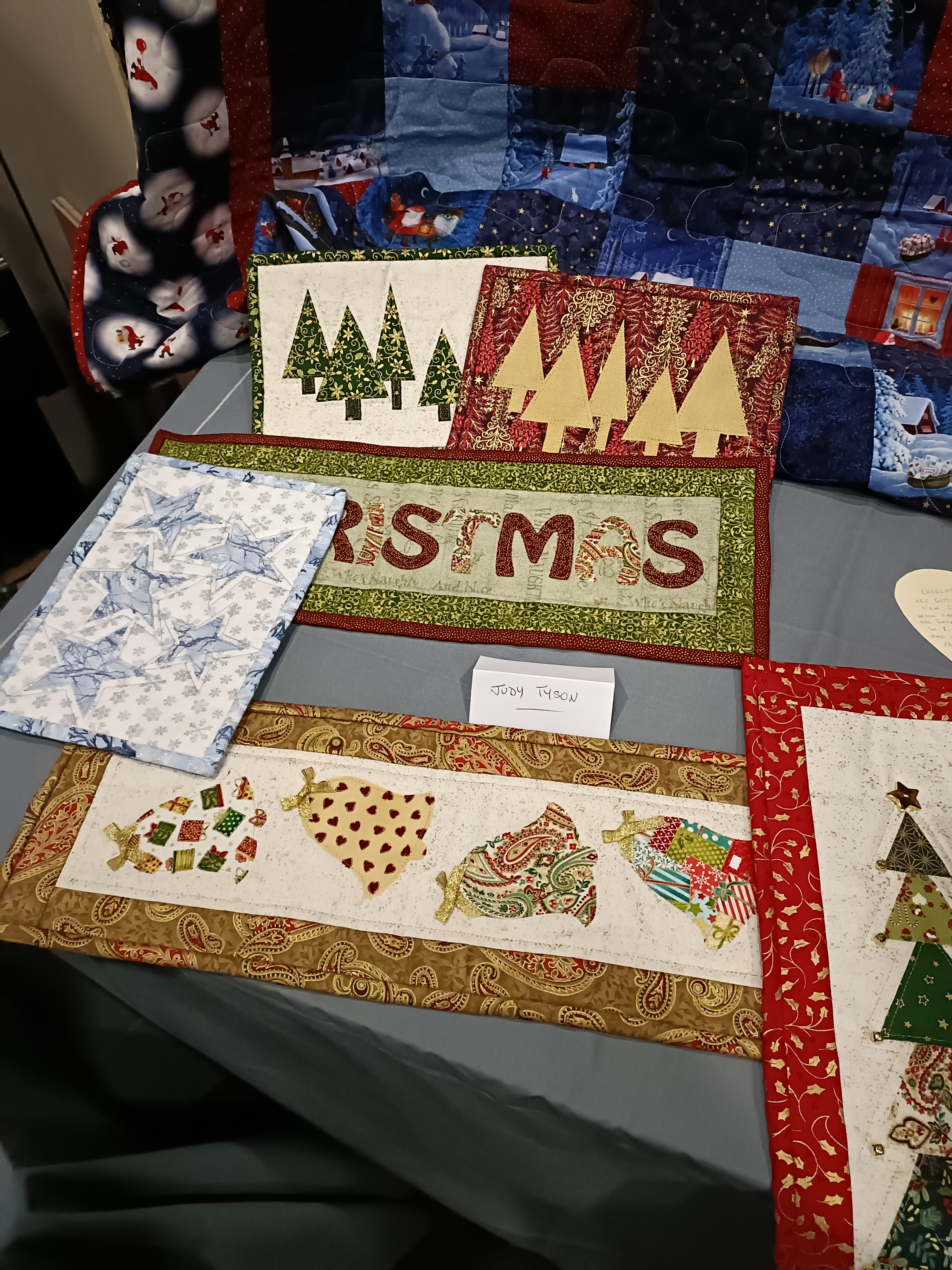
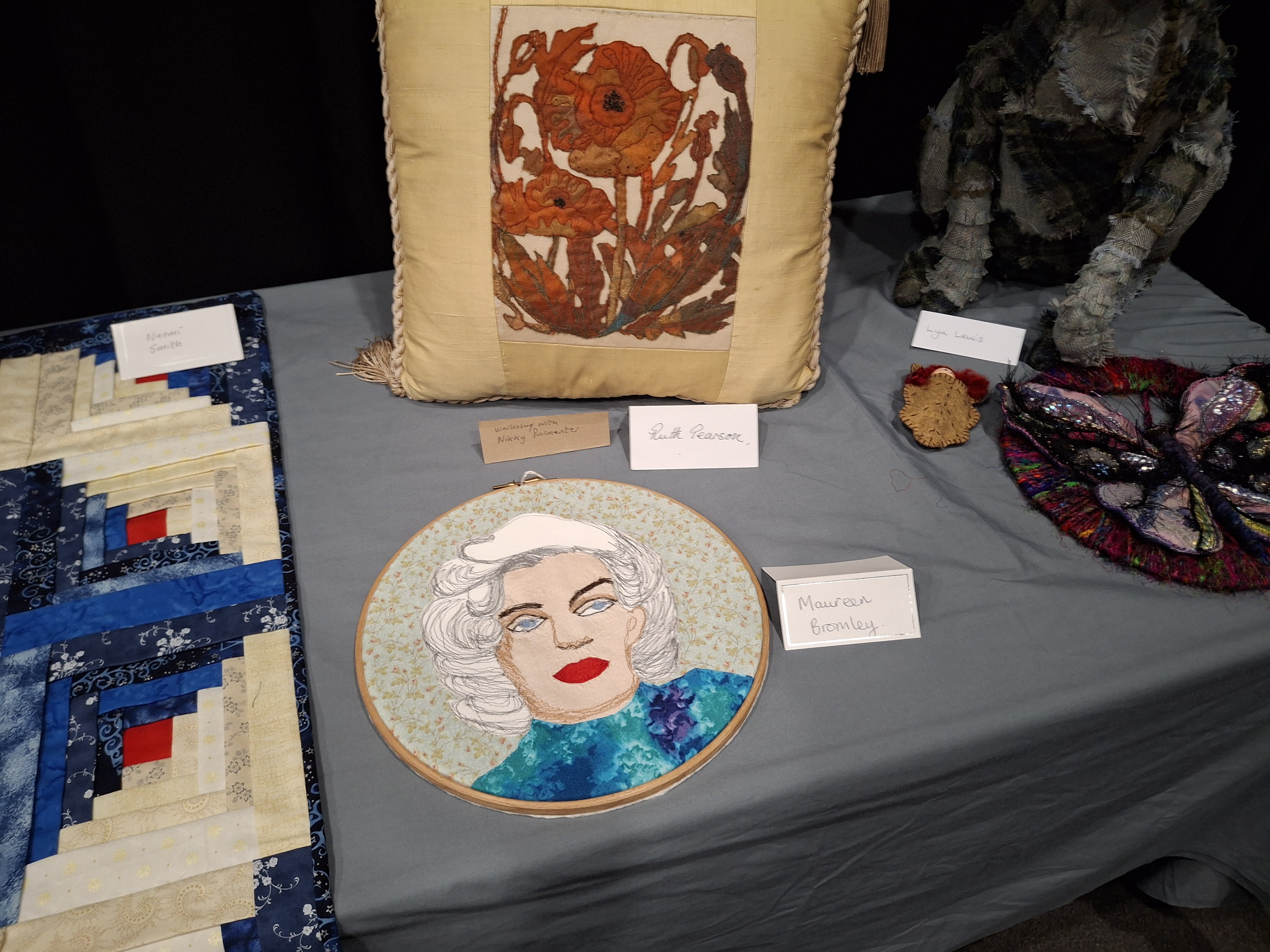
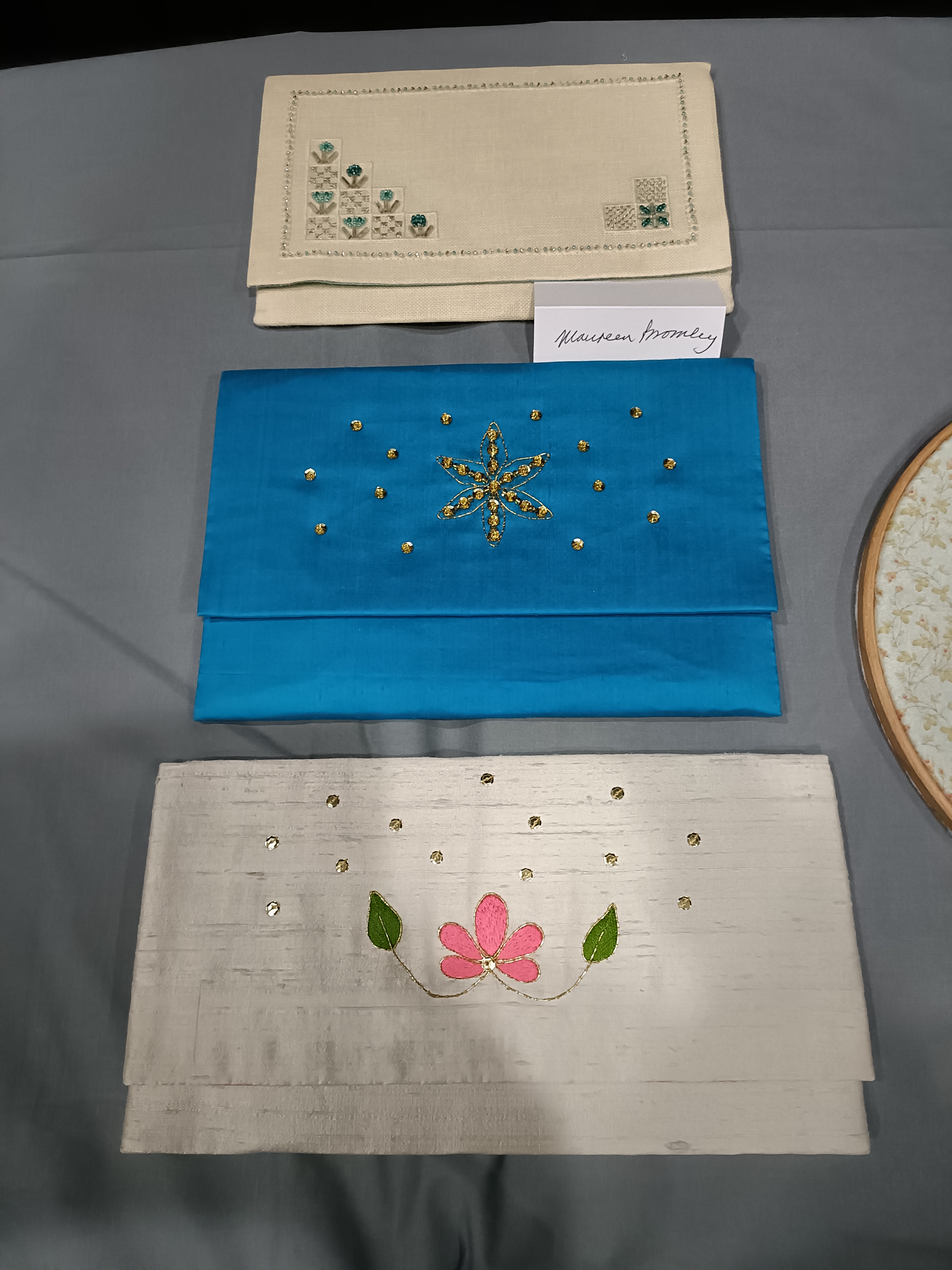
Nikki Parmenter came long to talk to us about her work in textile art. She talked us the techniques she uses to created her collages. She works mainly on a large scale, most of her pieces are larger than A1 size, some reaching 6 feet or more! Her works incorporate elements of different cultures through the world taking inspiration from artists such as Hokusai and Botticelli, traditional mandalas and imagery from Persia, Tibet and Thailand to tell a story. She recycles materials, using scraps of plastic acetate and PVC sheeting to fuse with fabrics, creating 3-D elements. Her work is embellished with machine embroidery and acrylic paints to bring the pieces to life.

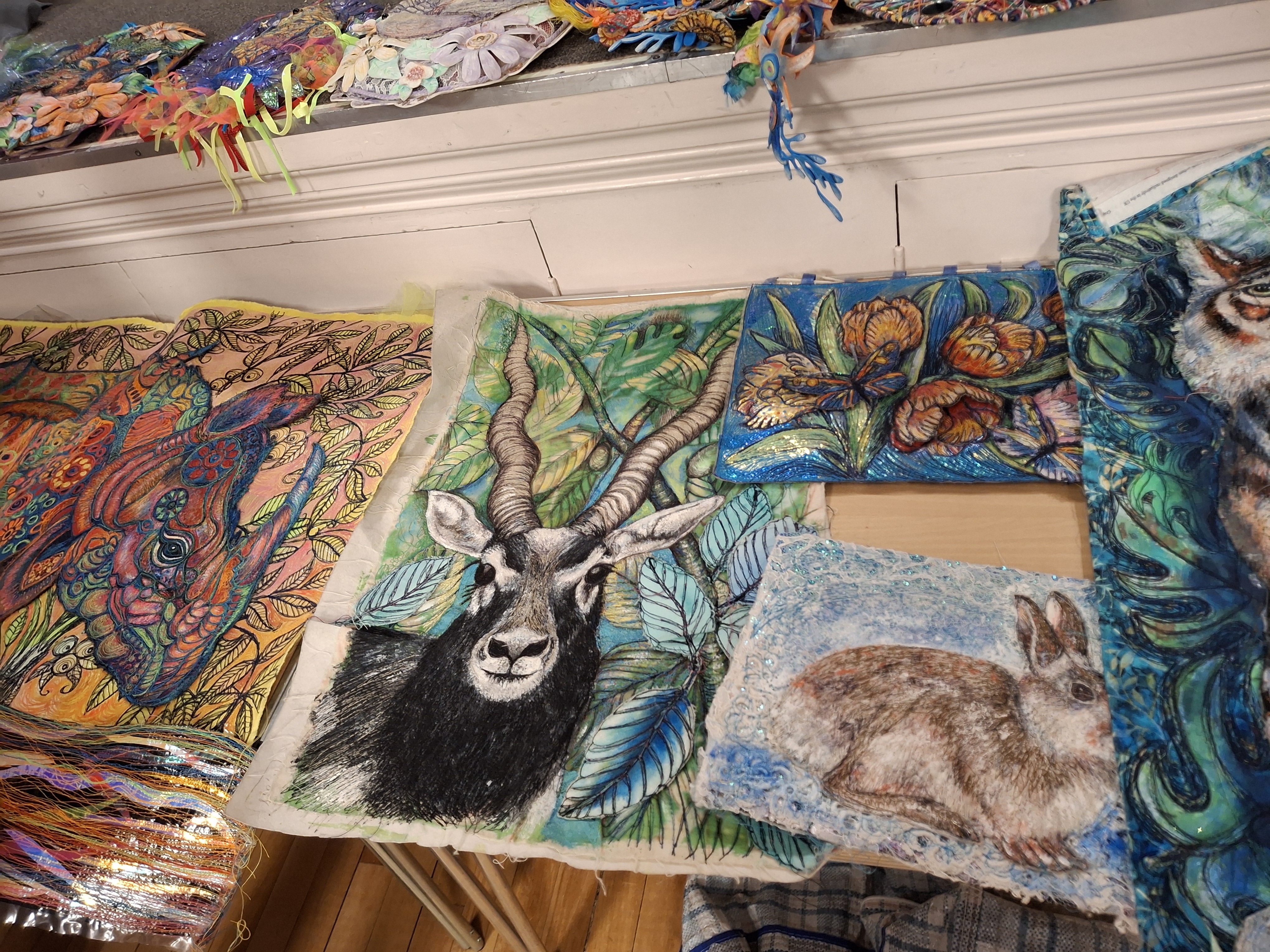
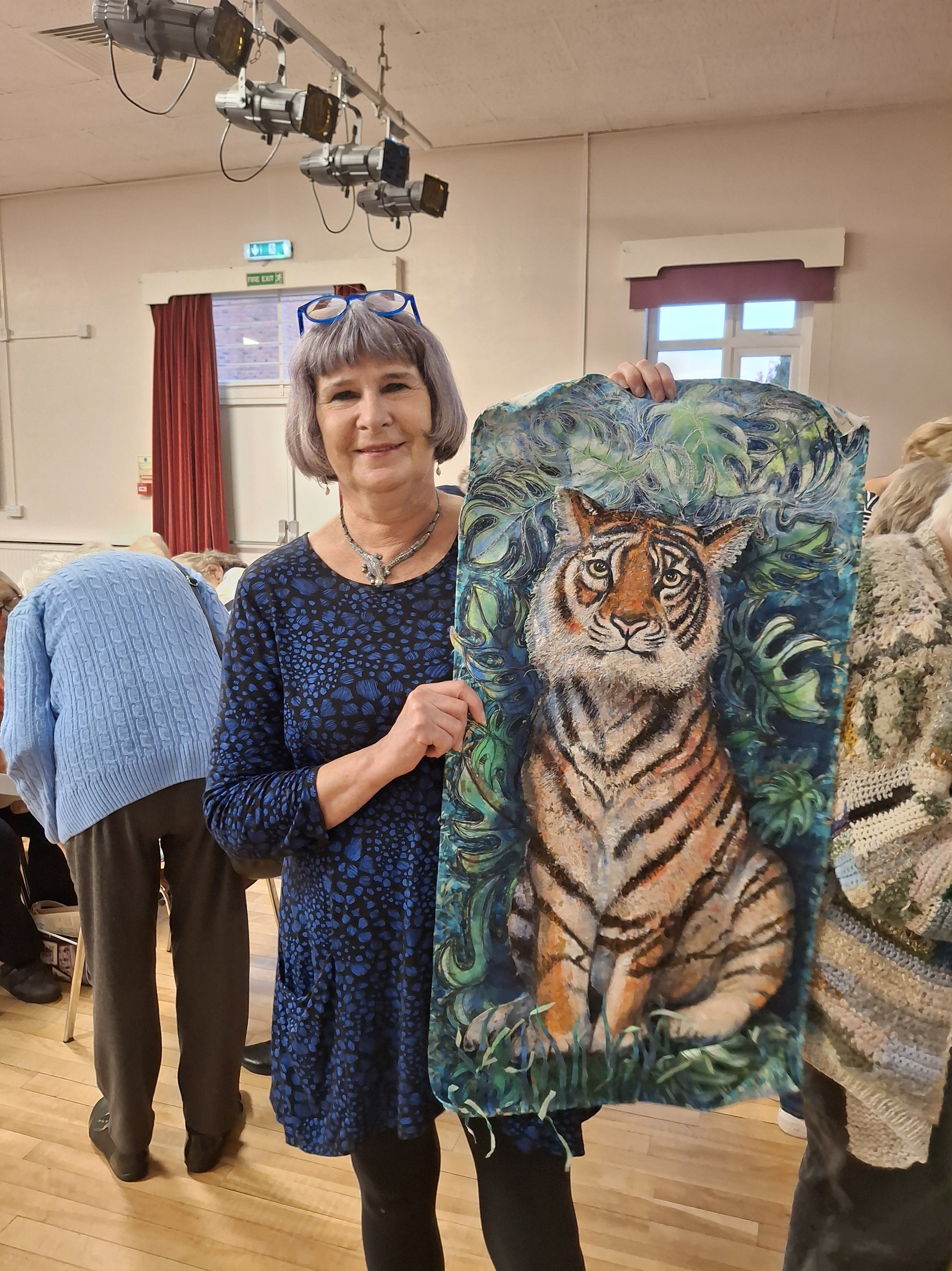

October 2025 – The Snarky Stitch
Our October speaker was Sass Tetzlaft, who spoke on ‘The Snarky Stitch – Machine Embroidery Meets Modern Muse’. She outlined her journey from childhood, developing technical skills and approaches through home sewing, commercially making wedding dresses and stage costumes, City and Guilds, exhibitions and a part-time degree. She explained how her socio-political beliefs underpinned her work, including subverting 1950s adverts and depicting pioneer women. She used a sewing machine, bondaweb, men’s shirting, off-cuts, beads and findings. She showed us how her technical style had changed over time. She made us laugh with her series ‘It’s not easy being PC’, presenting fairy tales with a modern twist, including Red Riding Hood reprimanding the wolf. She showed a wide range of applique panels, a panel from the Game of Thrones tapestry, commissions based on portrait photographs and a 3-D portrait.
 EAST YORKSHIRE EMBROIDERY SOCIETY (EYES)