September 2025 – Sashiko, Boro and Kogin

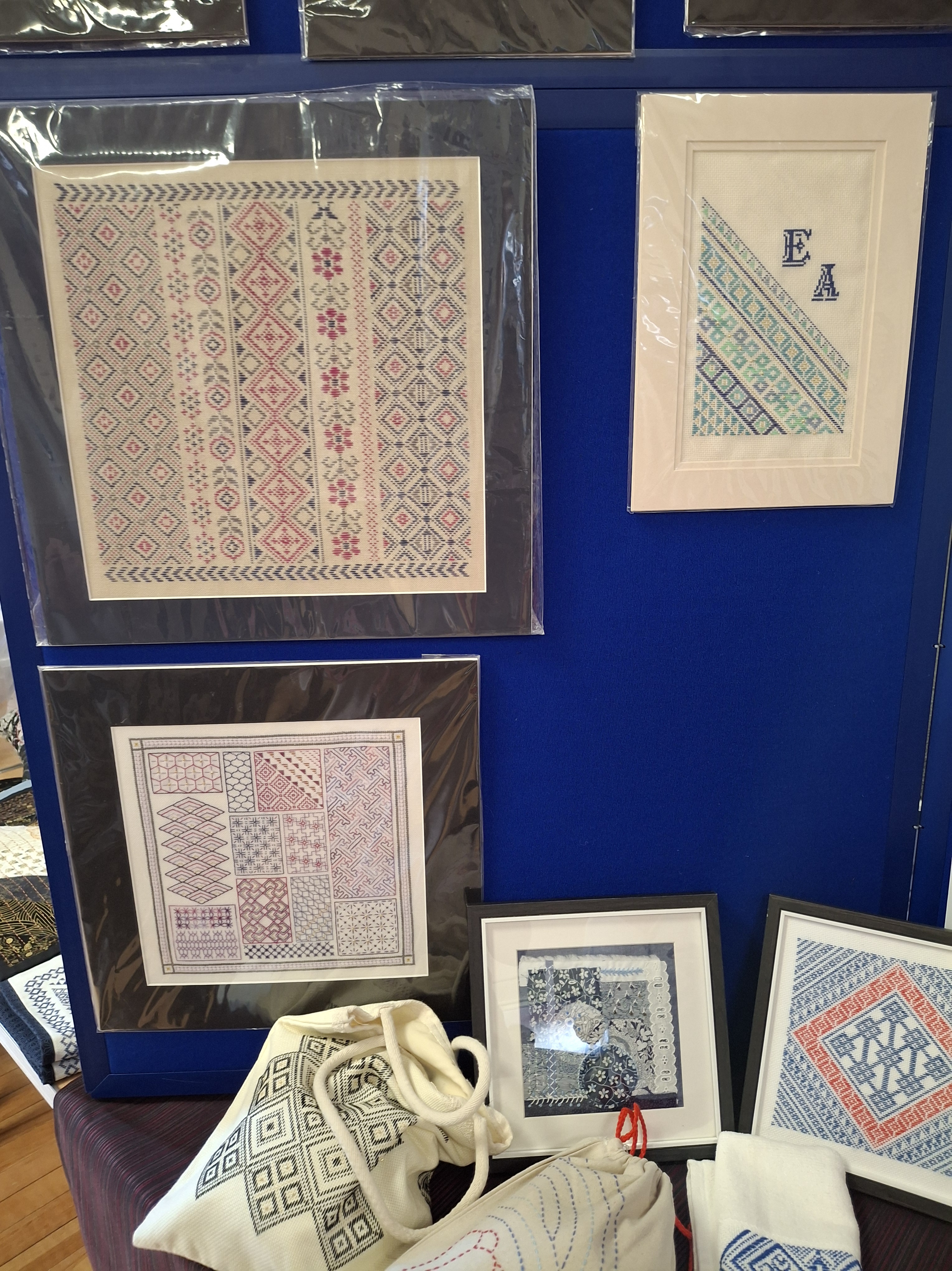
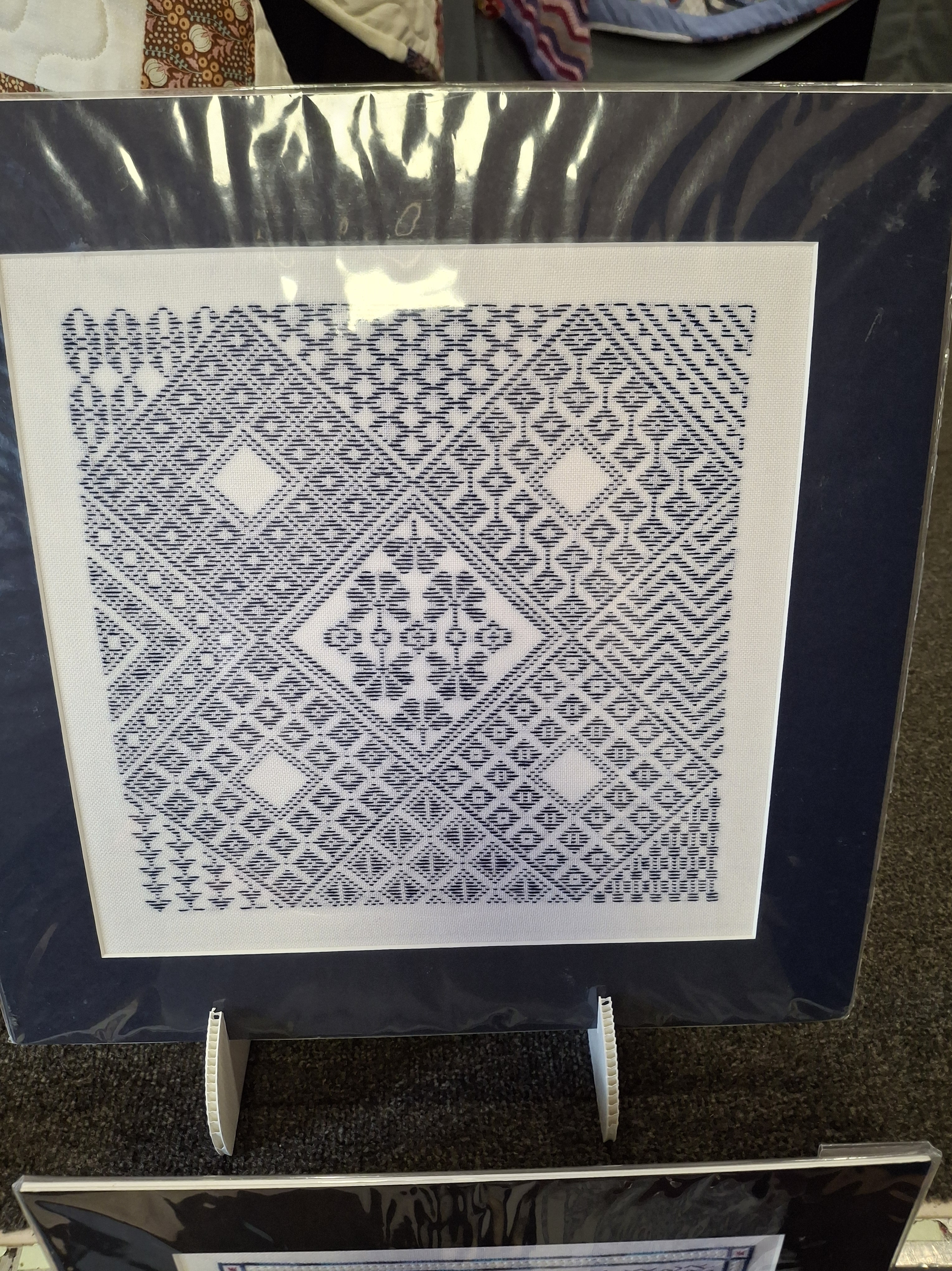
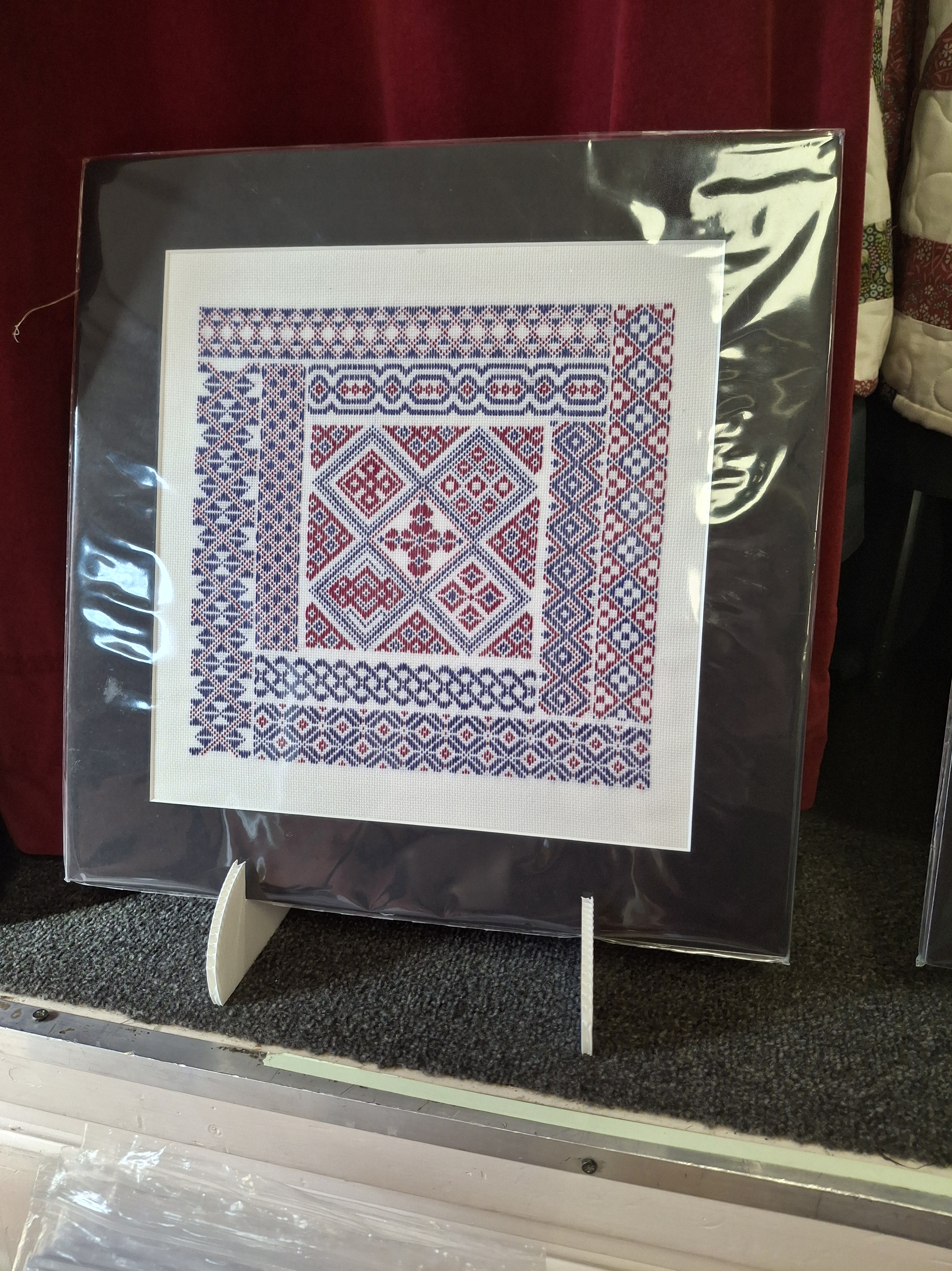
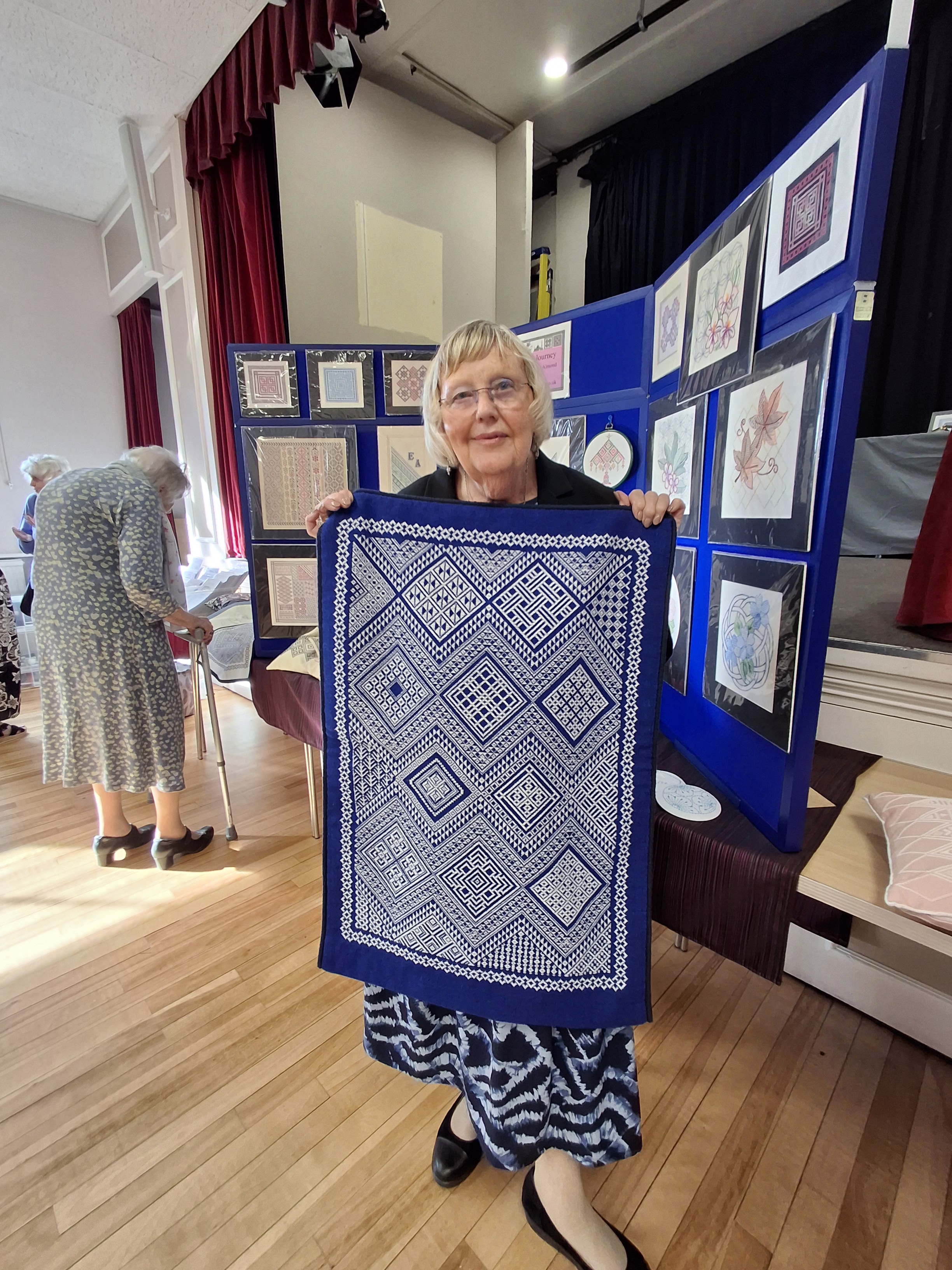
September saw the return of Liz Almond, who this time came to talk to us about the traditional Japanese techniques of Sashiko, Boro and Kogin. Liz started by telling us the fascinating history of the three techniques, which started in Northern Japan as early as the 15th Century when the fabrics available to the lower classes were restricted. Boro is a style of patchwork used to patch clothing using scraps, making the most of the precious fabric. The scraps were attached using a simple, decorative running stitch (Sashiko). Kogin developed to reinforce areas of clothing and make them warmer. As each family had their own design, it also served as a form of identification for the fishermen.

Liz showed us how the three techniques can be used today, passing some of her work around the group.
July 2025 – Embroidery : Tradition Meets Innovation

July’s speaker was Tony Phillips (the Manbroiderer), a textile and mixed media artist. He started his talk with a brief history of embroidery, showing us how different styles from different countries have influenced his work. He then went on to talk about how, post the covid lockdown, embroidery, and crafting in general, is going through a renaissance, with a new generation of crafters coming to understand the importance of the mindfulness and creativity on mental health and wellbeing. He discussed the future of embroidery, how the increasing focus on recycling/upcycling can be used alongside modern technology and AI to enhance the creative process, while still blending with traditional hand techniques.

June 2025 – Agnis Smallwood

Agnis was a weaver and teacher who discovered her love of weaving during an Art Foundation Course.  She described weaving as the interlacing of yarn which requires structure and creativity.  Her teaching covered all kinds of looms and everything from simple techniques to very complex projects and covered all levels of skill and ages.  The process was described for the creation of warps which would be fastened to a loom.  Agnis was involved in the Peace Project which was a collaboration of artists from 20 diverse groups. There were a variety of examples of Agnis’s work on display.

May 2025 – Upcycling Hats

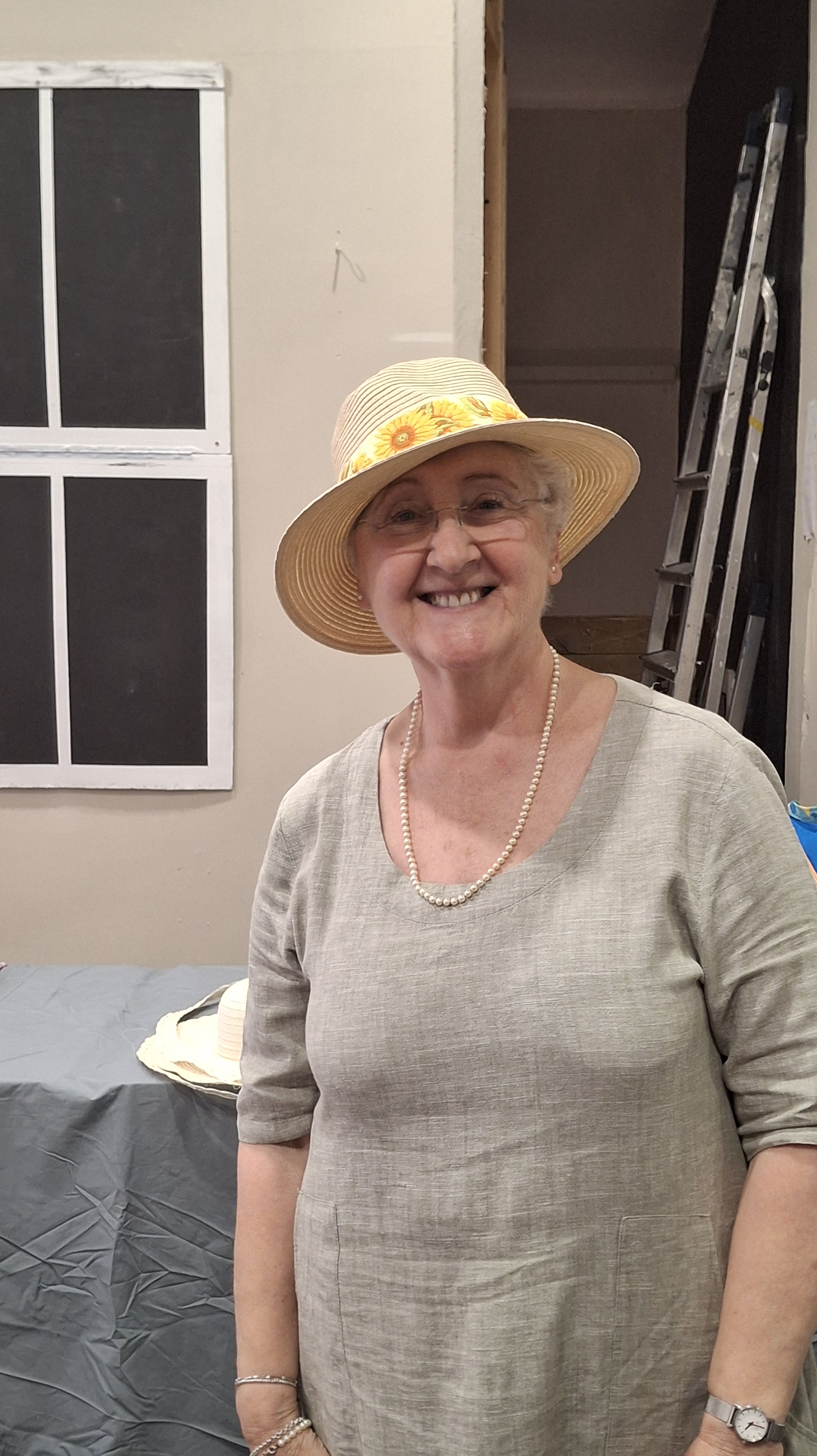
The speaker for May was Til Wright, substituting for the published talk. Til took a millinery course after finishing her career in education.  The process for making hats was time consuming and expensive so she had focussed her attention on upcycling hats.  Til displayed a wide range of hats which she had upcycled.  The simplest process was to replace the band with cross grain ribbon, silk scarves, fabric etc and then add embellishments. Til had purchased seven identical hats and used these to demonstrate how a simple adornment could change the whole appearance. The use of steam was demonstrated as a simple method of restoring a hat and Til hoped that she had inspired the members to “have a go”.

April 2025 – Clothing the Lost King – Reconstructing the wardrobe of Richard III

April’s speaker was Ninya Mikhaila, an historical costumier based in Nottingham, who makes museum-standard costumes. She explained how she came to work on costumes for the 2022 film “The Lost King”. Throughout the film, which is set in 2012, the year Richard III’s bones were found in a Leicester car park, Richard appears in 15th century regalia, and Ninya was initially brought in to create an accurate representation of armour for the Battle of Bosworth scenes at the end of the film. She was contacted in the March, with costumes to be finished in May! Undergarments needed to be right for the armour to be attached to, and she showed us photos depicting the fitting of armour and the crimson velvet arming doublet worn by Harry Lloyd (who played Richard in the film), a process made more difficult by Covid distancing restrictions in place at the time. Subsequently she was asked to design all the costumes for him. His surcoat in crimson and blue silk with gold embroidery indicated a person of royalty or high rank, and the leopards on it were embroidered in India. Ninya herself created the fleurs de lys in 3 different sizes. We gained a fascinating insight into the details that goes into making historically accurate costumes.

March 2025 – Unravelling the Archive

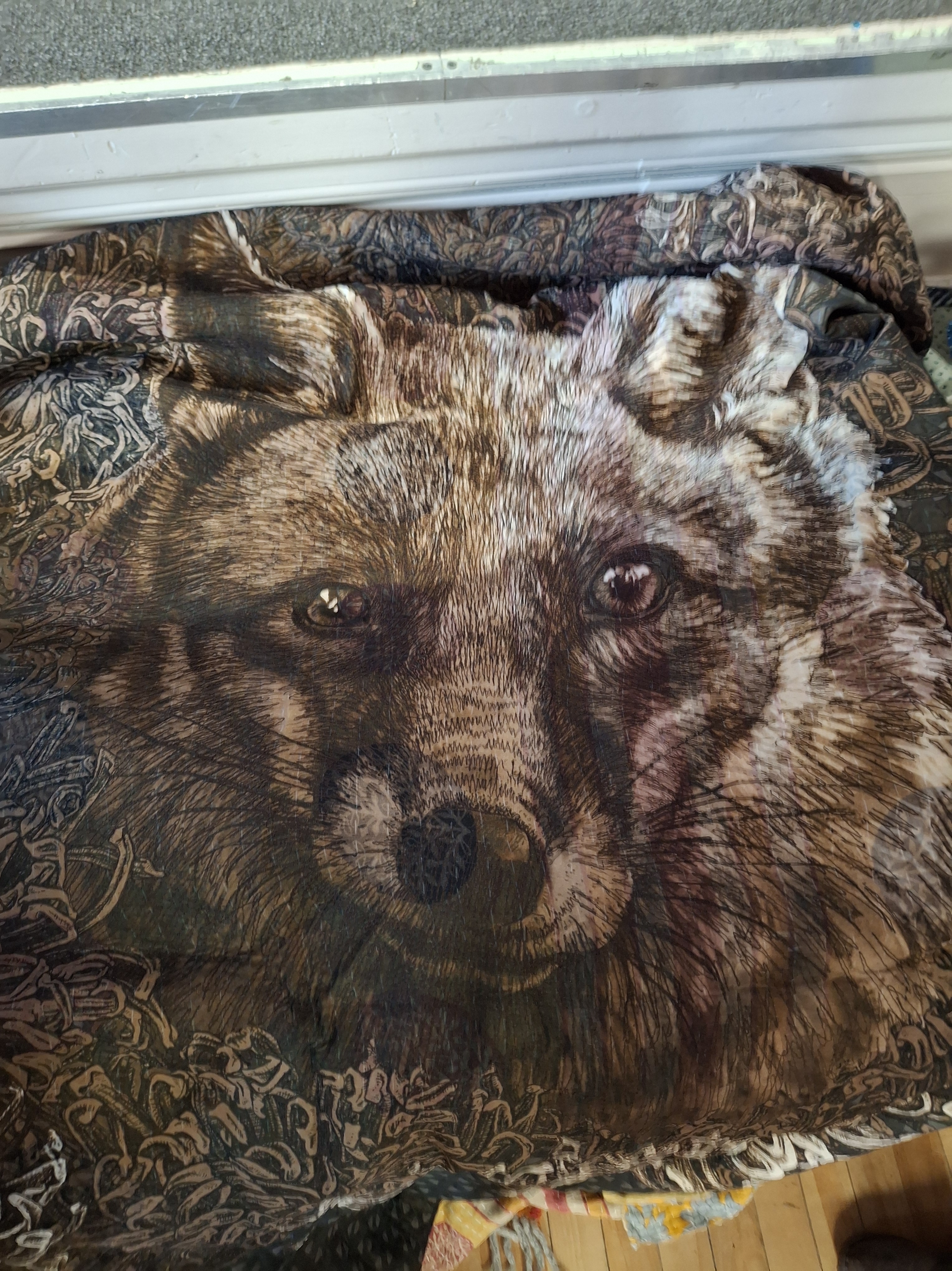
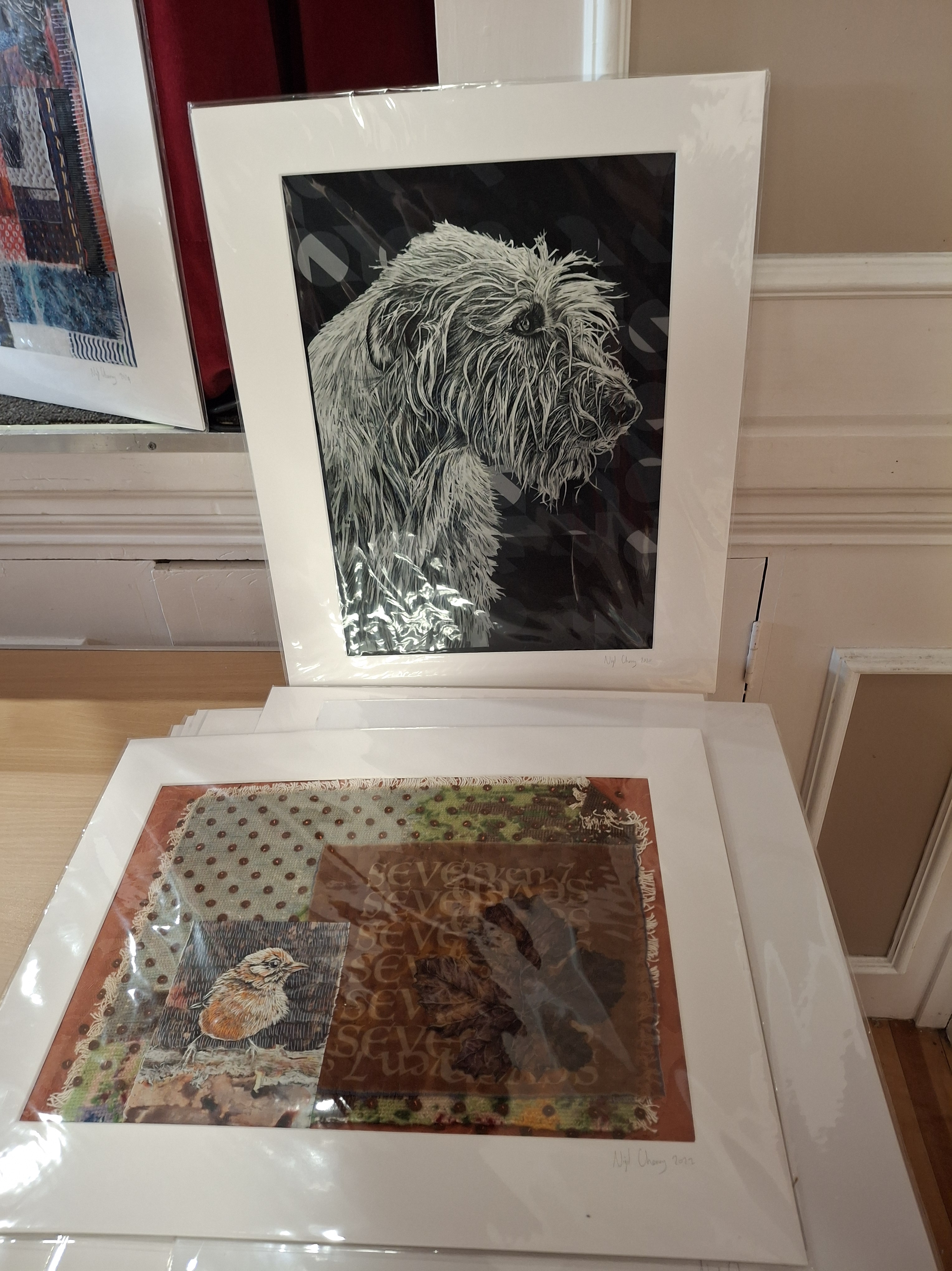
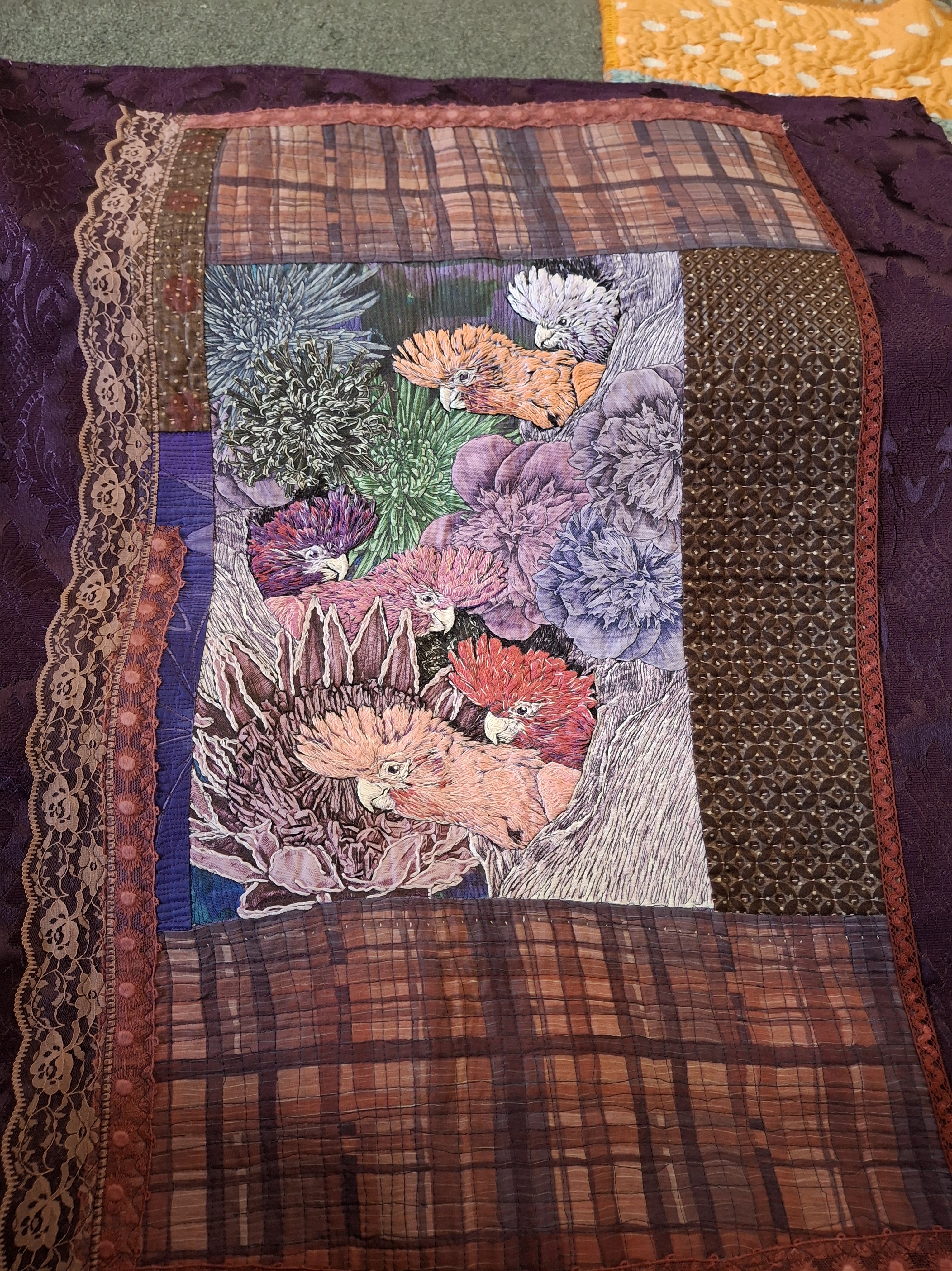
Our speaker for March was Nigel Cheney who spoke to us about his art and design throughout the years. Born in Market Harborough, with both his parents working in a textiles factory, Nigel grew up around textiles, leading him to have an interest in embroidery from an early age, winning the “Young Embroider’s” award for his O Level work. Nigel’s pieces often start as a drawing, which he then uses as a base to make art in embroidery, using vintage materials as sustainably as possible. He is fascinated by images of the natural world and the ephemera people collect, and how these can represent an oral history. He uses textiles as a vehicle for communication and the telling of stories, giving new life to old fabrics.

He gave a very entertaining and interesting talk, and brought some of his artwork and beautiful throws for us to admire.

February 2025 – The Art of Millinery

February’s speaker was Sherry Richardson, who designs and makes hats, and is known as a “hatter who flatters”. She told us of her early memories of wearing hats and how stylish they made her feel. In her 30s, she did a City and Guilds course on millinery in Huddersfield. She modelled a variety of hats she made during this time, including a turban, fez, cloche and tiara. In 2005 she did the catwalk at the Great Yorkshire Show and pre-pandemic she worked with Gok Wan to produce beautiful, extravagant hats for his catwalk shows. We could see how Sherry is influenced by nature and the changing seasons in her designs, which feature her use of felt, leather, lace, sinamay (a lightweight natural product), paper, recycled and vintage millinery items. Many gorgeous hats to admire!