April’s speaker was Ninya Mikhaila, an historical costumier based in Nottingham, who makes museum-standard costumes. She explained how she came to work on costumes for the 2022 film “The Lost King”. Throughout the film, which is set in 2012, the year Richard III’s bones were found in a Leicester car park, Richard appears in 15th century regalia, and Ninya was initially brought in to create an accurate representation of armour for the Battle of Bosworth scenes at the end of the film. She was contacted in the March, with costumes to be finished in May! Undergarments needed to be right for the armour to be attached to, and she showed us photos depicting the fitting of armour and the crimson velvet arming doublet worn by Harry Lloyd (who played Richard in the film), a process made more difficult by Covid distancing restrictions in place at the time. Subsequently she was asked to design all the costumes for him. His surcoat in crimson and blue silk with gold embroidery indicated a person of royalty or high rank, and the leopards on it were embroidered in India. Ninya herself created the fleurs de lys in 3 different sizes. We gained a fascinating insight into the details that goes into making historically accurate costumes.
Category Archives: Meetings
March 2025 – Unravelling the Archive
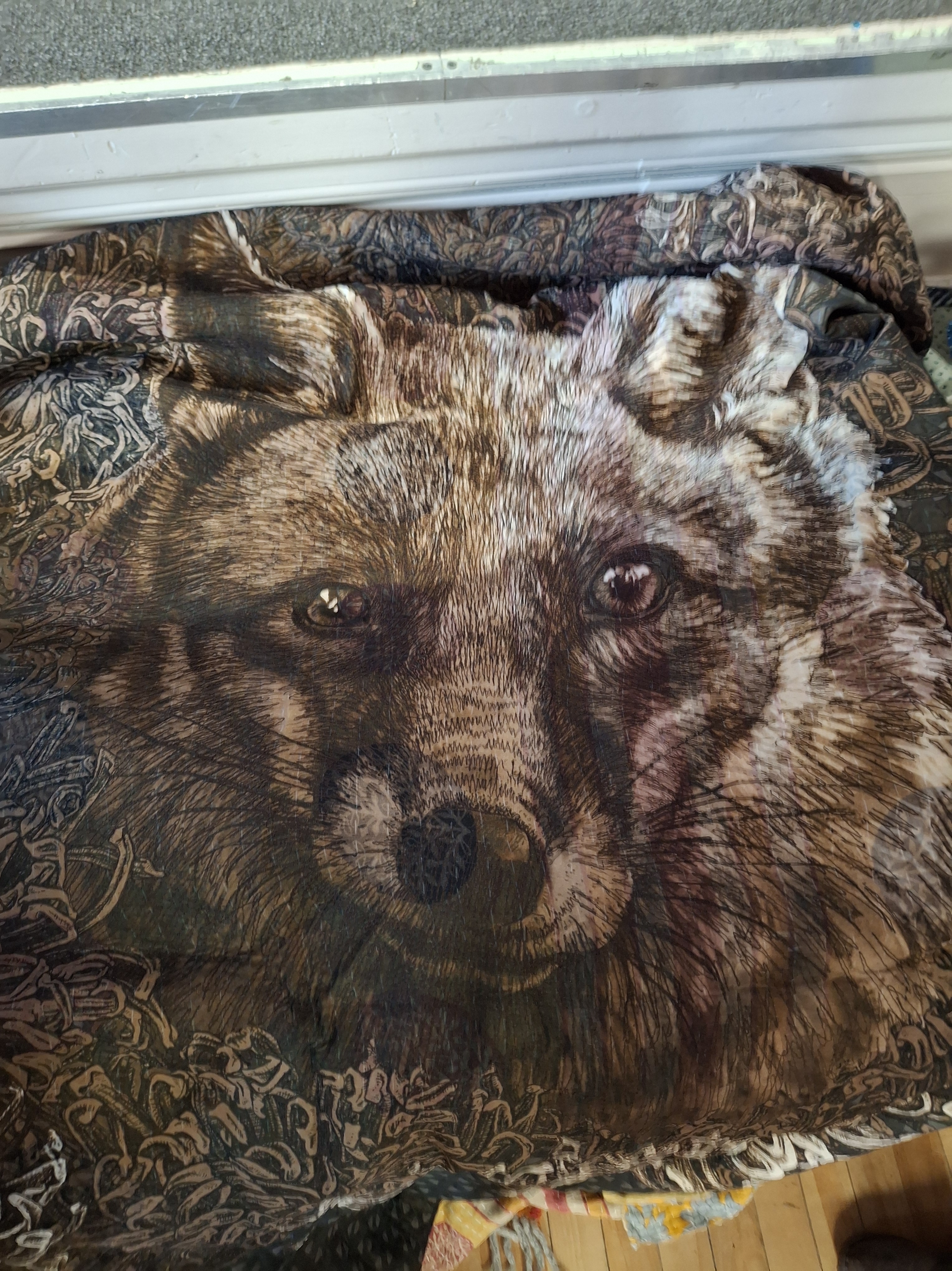
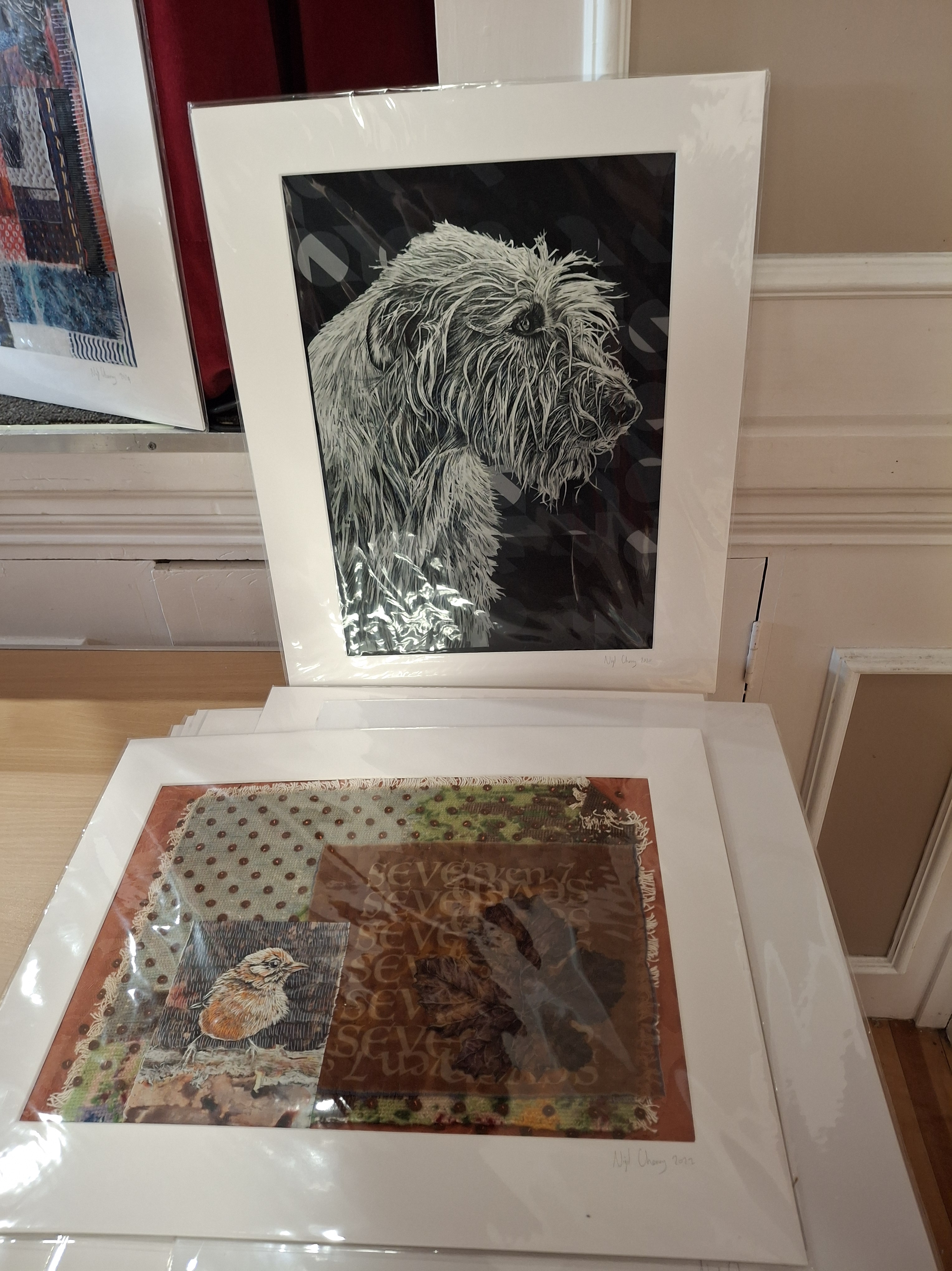
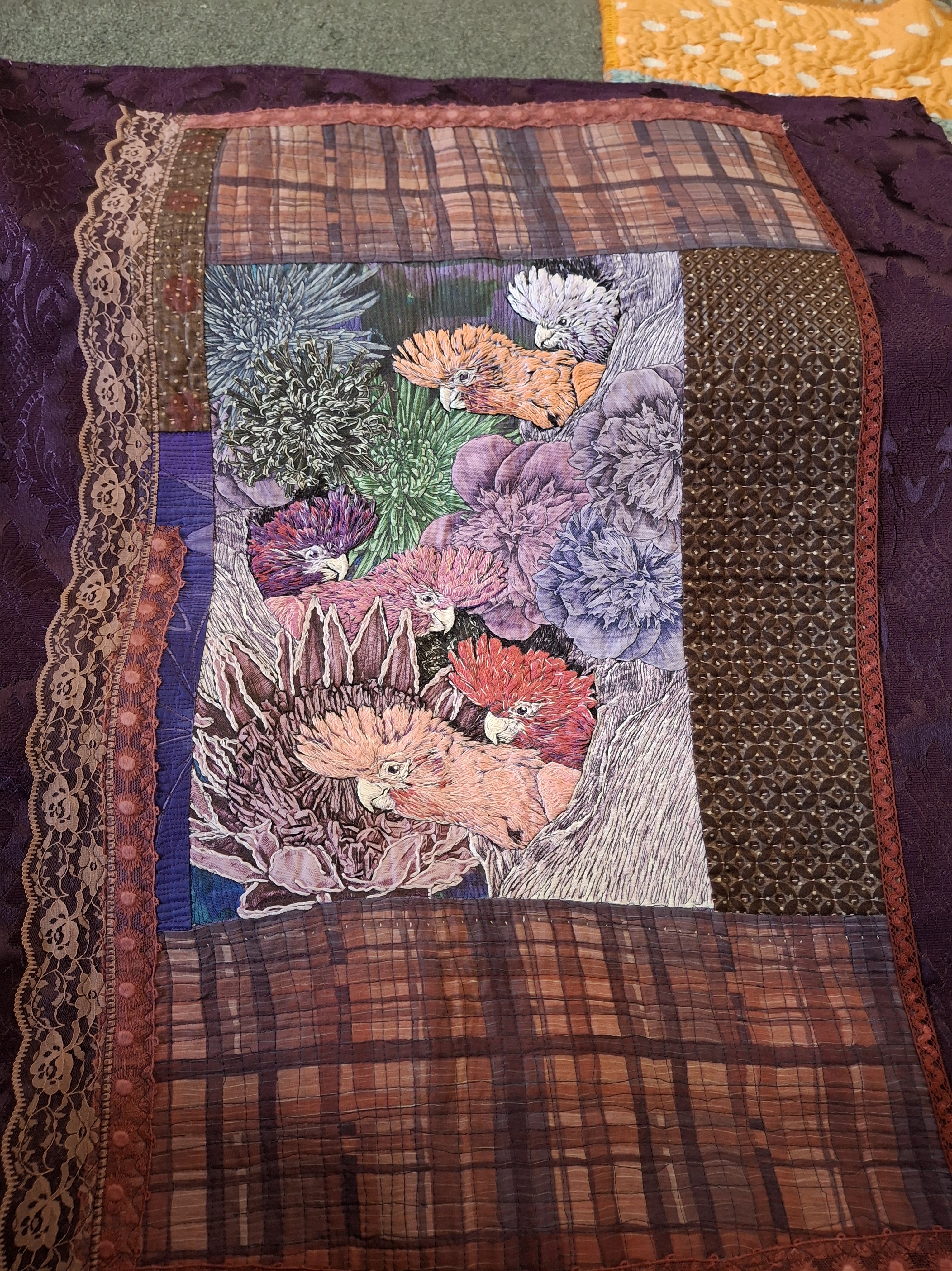
Our speaker for March was Nigel Cheney who spoke to us about his art and design throughout the years. Born in Market Harborough, with both his parents working in a textiles factory, Nigel grew up around textiles, leading him to have an interest in embroidery from an early age, winning the “Young Embroider’s” award for his O Level work. Nigel’s pieces often start as a drawing, which he then uses as a base to make art in embroidery, using vintage materials as sustainably as possible. He is fascinated by images of the natural world and the ephemera people collect, and how these can represent an oral history. He uses textiles as a vehicle for communication and the telling of stories, giving new life to old fabrics.
He gave a very entertaining and interesting talk, and brought some of his artwork and beautiful throws for us to admire.


February 2025 – The Art of Millinery
February’s speaker was Sherry Richardson, who designs and makes hats, and is known as a “hatter who flatters”. She told us of her early memories of wearing hats and how stylish they made her feel. In her 30s, she did a City and Guilds course on millinery in Huddersfield. She modelled a variety of hats she made during this time, including a turban, fez, cloche and tiara. In 2005 she did the catwalk at the Great Yorkshire Show and pre-pandemic she worked with Gok Wan to produce beautiful, extravagant hats for his catwalk shows. We could see how Sherry is influenced by nature and the changing seasons in her designs, which feature her use of felt, leather, lace, sinamay (a lightweight natural product), paper, recycled and vintage millinery items. Many gorgeous hats to admire!
January 2025 -Various techniques presented by our EYES members
In January, we had 4 members of the society who were kind enough to talk us through some of their work that had won prizes at recent exhibitions.
Maggie Tomlinson presented her hand-knitted sweater from the 2022 exhibition, which told the moving story of her father’s life from his birth and childhood on a farm, to his time serving in the army.
Sara Perkins gave an entertaining talk on the process of creating her wine bottle doll and it’s many accessories from the 2024 exhibition, which was (retrospectively – she had forgotten the subject of the exhibition when making the doll!) inspired by Strauss’s waltz “Artist’s Life”.
Hazel Barker presented a lovely quilt, “Love and Laughter in May” she had made for her daughter’s wedding. The wedding guests were all asked to write their wishes for the bride and groom on fabric, which Hazel then made into the quilt along with some photos.
Diane Beaumont talked us through the creation of 2 pieces, “Nature in Spin”, a mixed media piece and “Bluebell Wood”, a thread painting on silk, that were selected for entry into the 2024 Open Exhibition at the Ferens gallery in Hull.
December 2024 – Festive Fifties
Our December speaker was Meredith Towne, who was a dress historian and clothes maker. She gave a talk celebrating the 1950s’ evening wear. Various items of clothing were shown which included cocktail dresses and a smocked children’s party dress. Meredith read from a pamphlet which outlined the arrangements necessary for getting ready to go out in an hour. The required underwear was modeled, followed by a cocktail dress and accessories. The talk was vert entertaining, and was supported by Meredith’s “glamorous assistant”, who displayed some of the items.
November 2024 – Patchwork: Quilts from the Country and Other Quilting Tales
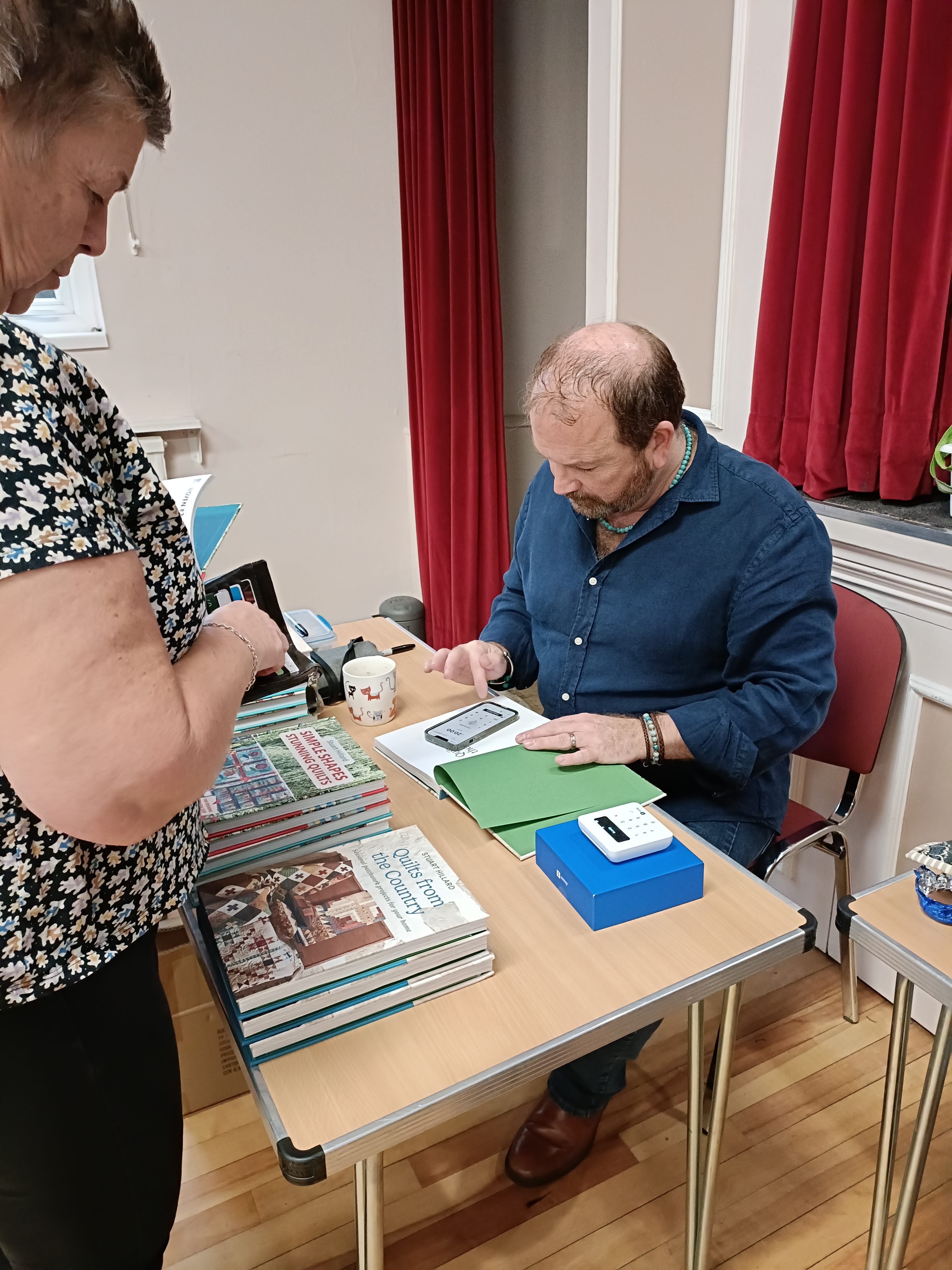
Our November speaker was the lovely Stuart Hillard, always one of our most popular guests, who gave a very entertaining talk to a full house, on mistaken identity (apparently he’s really Kaffe Fassett…) and the inspiration for his new book “Quilts from the Country”.
Having grown up in the countryside, Stuart wanted to write something personal to him and reflect his love of the country, so his latest book is full of quilt designs with seasonal themes.
He brought along a selection of beautiful quilts made for the book, and had some signed copies of his book for our members to buy.
October 2024 – Travels: Mapping Masculinity
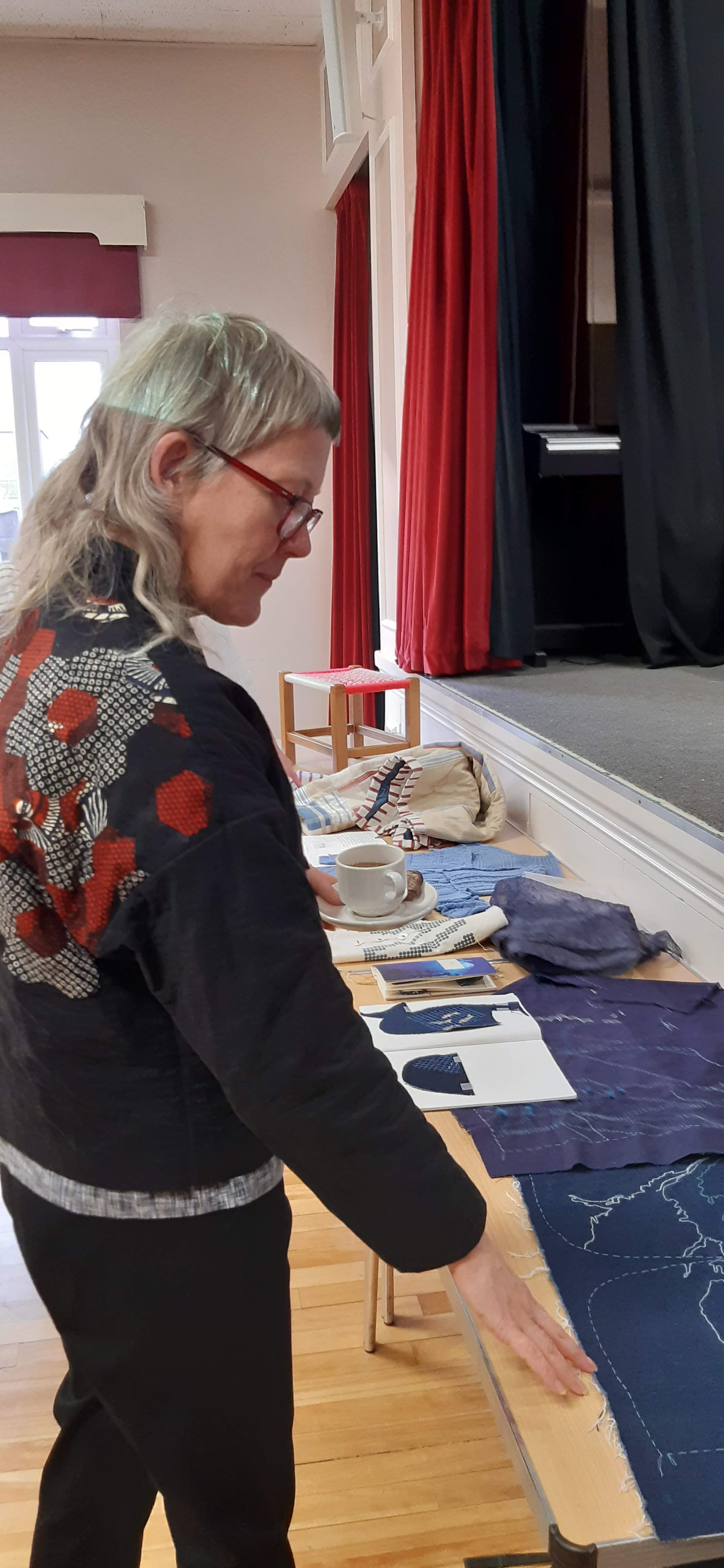
Our speaker for October was Dr Claire Day, Senior Lecturer at Coventry University, London, who came to talk to us about her research into the onshore clothing worn by the Hull distant water trawlermen in the 1950s – 1980s.
She started by catching us up on the work she’d been doing since her last visit to us, then took us through her creative process for design mapping.
Hull born and bred, Claire saw the play Northern Trawl at Spring Street Theatre as a fashion student, and became fascinated by the the suits worn by the actors playing the Hull trawlermen, who were well known for their smart, distinctive look in the Hessle Road area. From this, she started to research the origins of the suits and how they had changed over time, evolving from the classic Lounge suit, through the Italian style and the influence of the Beatles, while keeping the key features of the trawlerman’s suit such as the Spanish waistband, eventually producing her PhD thesis ‘King of the Deck: The sartorial extremism of the distant-water trawlermen of Hull 1950-1980’
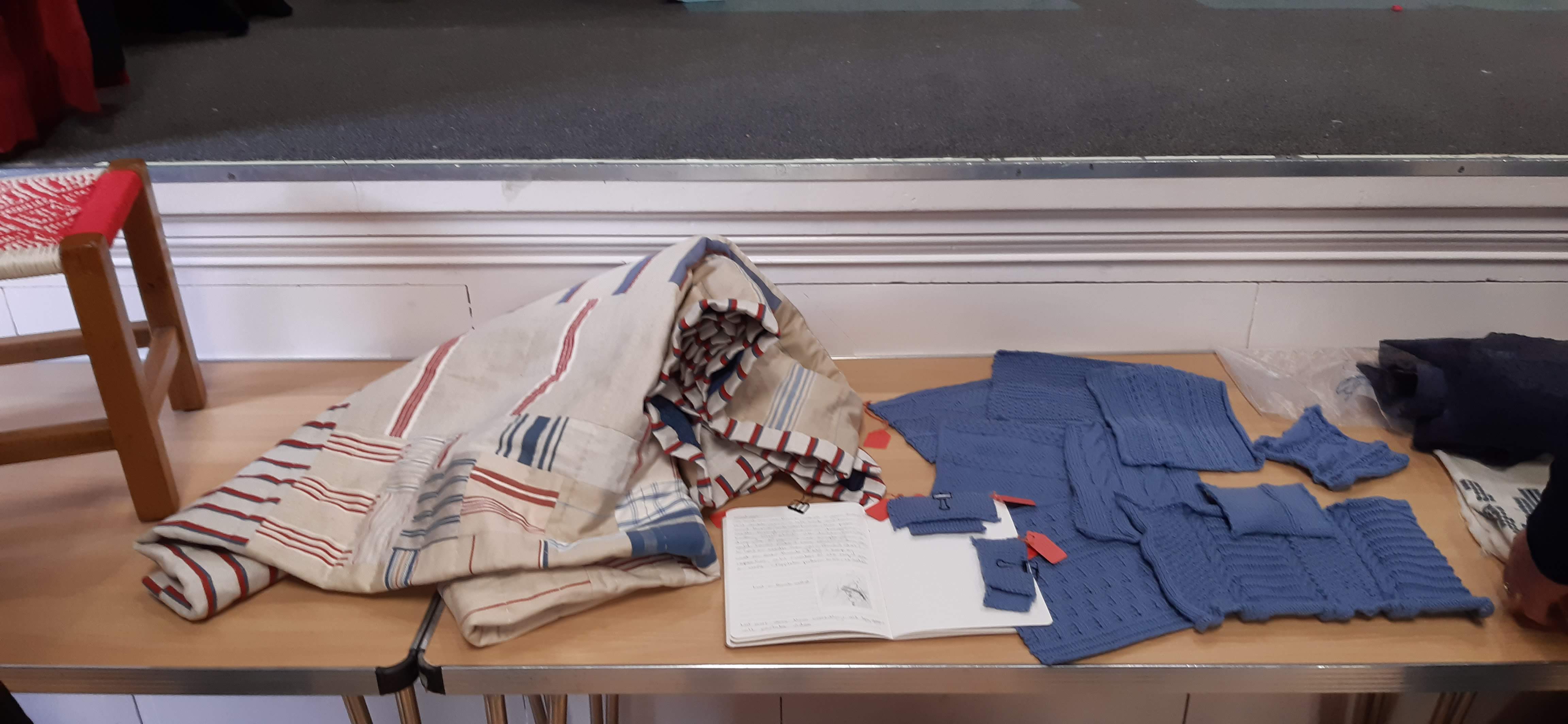
She then went on the talk about her research into the history of the traditional fisherman’s gansey, the tightly knitted traditional fisherman’s sweater, and the wool and patterns used to create the warm garments required for the extreme conditions the men faced at sea.
This was followed by a fascinating discussion with the members on ganseys and the tightly spun 5-ply wool used to make them.
Photos of Claire and some of the work she brought in to show us, including examples of gansey patterns.
September 2024
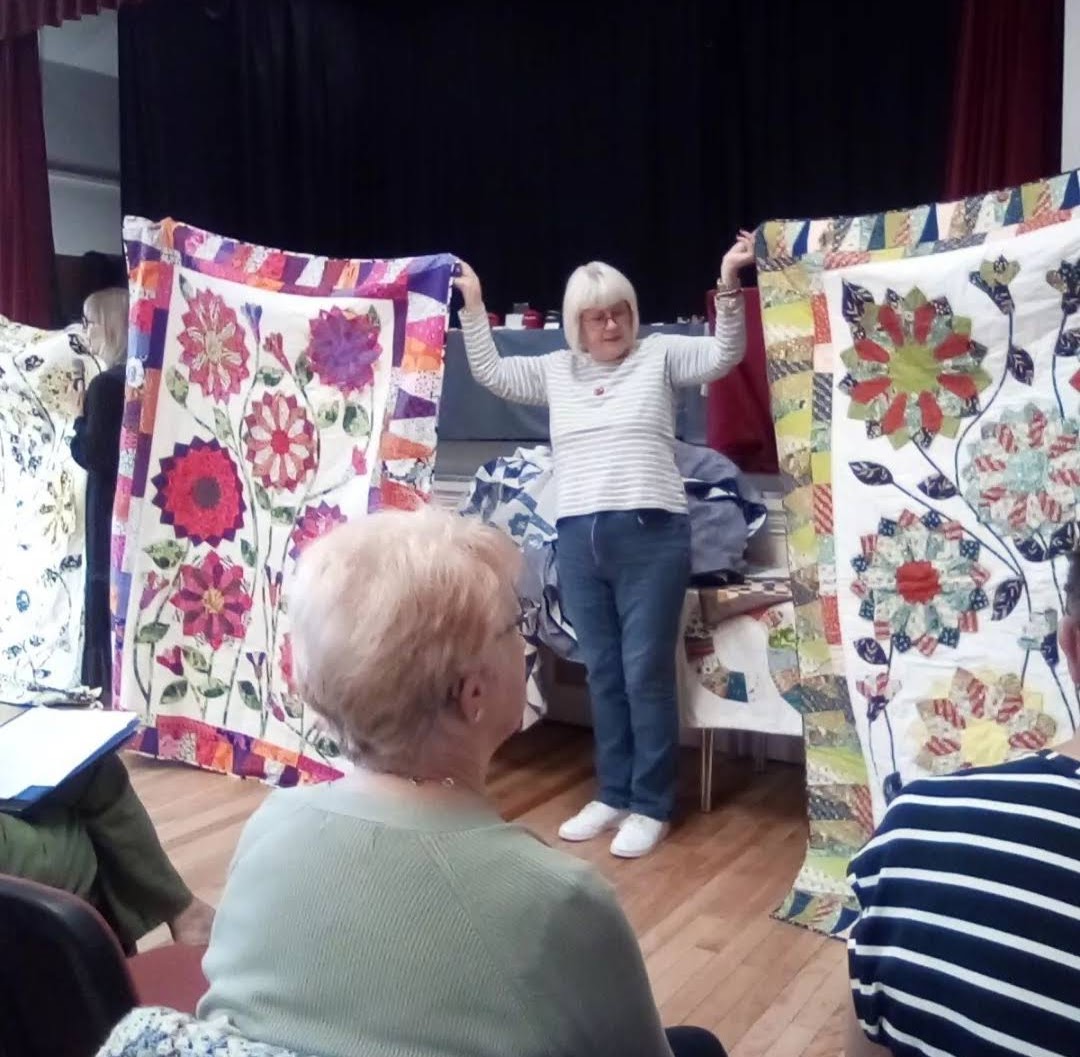
Our scheduled speaker for September was unable to make it, so some of out members stepped in to talk about quilting and show some of their creations. The work was greatly admired, and the members had plenty of questions for the speakers.
Diane Beaumont, winner of the 2024 Grosvenor Show Journal Quilts Challenge, ‘Making a Scene’ spoke about her quilting journey – how she began with traditional quilts, added applique, experimented with colours and techniques, and developed towards art quilts – and about inspiration for her wall hangings depicting nautilus shells and an octopus (shown in our 2022 exhibition) and the importance of enjoyment in choosing themes and techniques. She illustrated how her sketches evolved during the creation of a piece and the question of when a piece was complete.
Hazel Barker and members of quilting group in Hessle then showed their quilts: they had used the same pattern, but different fabrics. The second series shown was ‘Big Blooms’, an Australian design.
Carol Arthur showed her quilts in different colour schemes and how she had added to the pattern.
Hilary Goldsmith introduced quilts made by herself, Lesley Cork, and Dorothy Bell in Cober, using tutor Carolyn Forster’s pattern in the ‘quilt as you go ;technique.
Rachel Benson rounded off the presentation with a Christmas quilt layout in different sizes and colours.
May 2024 : Helen Good – Tudor Knitting
Unfortunately the scheduled speaker, was unable to attend, so Helen Good kindly stepped in as a substitute to talk to us about about Tudor knitting.
Helen began her talk with an overview of the history of knitting which had originally derived from knots, and could be traced back to 240 BC. It was developed by the elite in a variety of countries and arrived n Doncaster in the 1570s.
Knitting began with socks and hats, and was originally without patterns. It was believed that cardigans and balaclavas were developed as a results of the Crimean War. Helen described the process for producing knitted hats, which were felted to ensure that they were warm and waterproof.
A variety of knitted hats were circulated amongst the members.
Alison Larkin January 2022: Georgian embroidery and costume

This month we were whisked back in time to the Georgian era, by local embroiderer and co author of the book Jane Austen Embroideries, Alison Larkin. Lots of elegant waistcoats and top coats with exquisite embroidery (and that was just the men) and the ladies in delicate silks and muslin, also either quilted or embroidered. Alison’s work on the Jane Austen patterns from “The Lady” magazine were delightful. A thoroughly enjoyable afternoon.
 EAST YORKSHIRE EMBROIDERY SOCIETY (EYES)